Potret – Photography Portfolio Elementor Template Kit
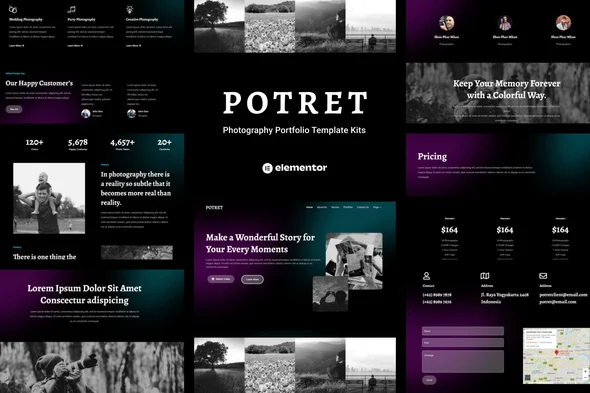
Potret Photography Portfolio Elementor Template Kit Overview & Portfolio Delivery Layer
Potret Photography Portfolio Elementor Template Kit is an Envato Template Kit engineered for photographers, agencies, and corporate studios that need to publish galleries, service pages, and pricing structures through Elementor’s drag-and-drop visual builder. The package removes the bottleneck of assembling portfolio layouts node by node by shipping ten pre-structured page templates — Homepage, About Us, Service, Portfolio, Contact Us, Pricing, Our Blog, Single Post, Reviews, and Our Team — as importable design data. Within an agency delivery pipeline, it operates as a layout layer that runs atop the Hello Elementor theme and compatible themes, allowing teams to replace demo imagery and copy without modifying theme files.
Technical Specifications & Deployment Matrix
| Engineering Metric | Deployment Specification |
|---|---|
| Base Technology / Framework | Envato Template Kit targeting Elementor 3.10.x; not a standalone WordPress theme |
| Runtime / Language Requirements | WordPress with Elementor and the Envato Elements plugin at latest versions; Hello Elementor theme activated |
| Data Exchange / Import Protocol | Kit ZIP uploaded unzipped via Envato Elements plugin or Elements > Installed Kits; permalinks set to Post Name |
| Front-End / Engine Dependencies | Elementor, ElementsKit Lite, MetForm, Sticky Header Effects for Elementor; Flexbox Container feature enabled in Elementor Settings |
| Persistence Footprint | None at schema level — imported layouts are stored as Elementor Saved Templates and re-used from the Templates library |
No-Code Import Pipeline & Execution Flow
The import sequence defines how design data propagates through an Elementor install. The Global Kit Styles template is imported first, which writes the site-wide typography and color tokens that every subsequent page inherits; skipping this step desynchronizes individual templates from the central design system. Each page template is then imported one at a time in the displayed order, after which the assets reside under Templates > Saved Templates and are pulled into new pages through the My Templates tab of the builder’s library. Page assembly requires selecting Elementor Full Width and hiding the page title in the builder’s page settings panel, with the homepage assigned as a static front page under Settings > Reading. The kit targets Elementor 3.10.x and depends on the Flexbox Container architecture, which must be activated under Elementor > Settings > Features before import so container-based layout structures resolve correctly. For studios evaluating decoupled implementations outside the Elementor template-kit runtime, Pixion exists as an independent theme-level portfolio path with its own rendering stack.
Core Technical Capabilities of Potret
- Centralized design token system: Global Kit Styles establish shared font and color variables across all templates, with per-element overrides available when a specific section requires divergence from the base palette.
- Flexbox container layout architecture: Layout structures rely on Elementor’s Flexbox Container feature rather than legacy section/column wrappers, requiring the feature toggle to be active before import executes correctly.
- MetForm contact pipeline: Form blocks are imported as templates, then attached to page layouts by selecting the MetForm widget through the Navigator, creating a new form, and inserting the saved template from the My Templates tab.
- ElementsKit header and footer control: Global headers and footers are registered through the ElementsKit Header Footer module with Entire Site scope, providing sticky-header behavior via the Sticky Header Effects plugin.
- Responsive mobile rendering: Every template ships with a responsive mobile view, so gallery and portfolio grids adapt to smaller viewports without secondary layout work.
Production Implementation & Operational Resilience
Deployment in client staging environments follows a deterministic checklist. Before upload, WordPress permalinks must be set to Post Name so imported template URLs resolve cleanly, and the kit ZIP must remain compressed — unpacking it locally breaks the Envato Elements import path. Safari users need the “Open safe files after downloading” preference disabled to prevent automatic archive expansion. During import, an orange banner at the top of the Installed Kits screen flags missing dependencies; clicking Install Requirements loads ElementsKit Lite, MetForm, and Sticky Header Effects automatically, which prevents broken-widget conditions on pages that reference those modules. Hosting should carry memory headroom adequate for Elementor’s builder, and the Flexbox Container toggle must be saved before any template import to avoid layout-structure mismatches. Where teams require a theme-native portfolio presentation instead of a builder-dependent kit, Pond Pro functions as a separate creative portfolio theme outside this runtime. Customization boundaries are explicitly style-scoped: fonts and colors are adjusted globally or per element, demo images originate from an Envato Elements collection and must be separately licensed or substituted with owned assets, and headers and footers are edited either through Elementor Pro’s Theme Builder or through the ElementsKit Header Footer workflow described above.
Frequently Asked Questions
Is Potret a standalone WordPress theme that activates under Appearance > Themes?
No, the package contains Elementor design data only. Hello Elementor must be installed and activated as the operating theme, after which the kit’s templates import through the Envato Elements plugin or the Installed Kits screen inside Elementor.
Can the demo images be used on a production photography site without additional licensing?
No, the demo images are drawn from an Envato Elements collection. Deploying them on a live site requires licensing them through that service, or replacing them with the studio’s own photography before launch.
Does editing global headers and footers require an Elementor Pro subscription?
No, Elementor Pro is one path via the Theme Builder, but the documented alternative uses ElementsKit’s Header Footer module, where a new header is created with Entire Site scope, activated, and populated by importing the header template.