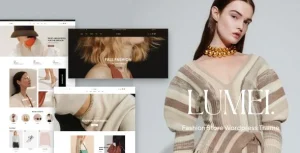
Lume – The Minimal Fashion & Clothing Shopify Theme
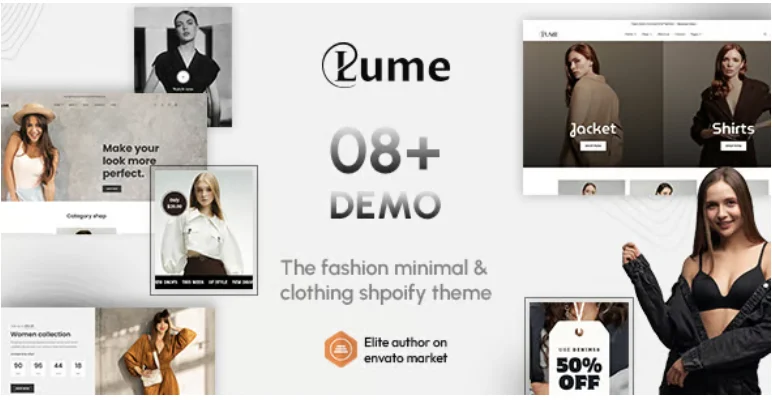
Lume Minimal Fashion & Clothing Shopify Theme Overview & Storefront Architecture
Lume Minimal Fashion & Clothing Shopify Theme is an Online Store 2.0 storefront package engineered for apparel merchants and agency teams launching clothing, streetwear, and luxury boutique shops without custom Liquid development. The package addresses the recurring bottleneck of assembling a conversion-oriented storefront — variant selection, cart interaction, product discovery, and seasonal merchandising — through prebuilt JSON templates and drag-and-drop section blocks. In production workflows, it operates as the presentation layer that renders product catalogs, promotional banners, and editorial content while preserving native Shopify checkout and app-block interoperability.
Technical Specifications & Deployment Matrix
| Engineering Metric | Deployment Specification |
|---|---|
| Base Technology / Framework | Shopify Online Store 2.0 architecture; Bootstrap 5.x front-end grid system |
| Runtime / Language Requirements | Liquid templating engine on Shopify-hosted storefront infrastructure; CSS and JS asset pipeline |
| Browser Compatibility | IE10, IE11, Firefox, Safari, Chrome, Edge |
| Front-End Dependencies | Layered PNG source assets, CSS files, JS files, Google Web Fonts |
| Data / Persistence Footprint | Native Shopify product, collection, and blog objects; demo product CSV for catalog import |
| Layout & Rendering | Fully responsive, high-resolution output; two-column content structures; RTL directional support |
Liquid Section Rendering & Storefront Conversion Pipeline
Lume renders storefront pages through Shopify Online Store 2.0 JSON templates that map Liquid sections into reorderable, drag-and-drop blocks. Each homepage variation — five or more minimal layouts ship in the package — is composed of section files that a merchant repositions, hides, or duplicates directly inside the theme editor, eliminating template-file editing for routine layout changes. A mobile slider configuration gives each section an independent breakpoint-specific presentation, so a hero or product grid can render differently on handheld viewports than on desktop without duplicate templates.
The interaction layer extends beyond static rendering. Live search dispatches Ajax queries against the product index and returns matched results without a full page reload, while the quick view popup loads product detail payloads into an overlay so shoppers can evaluate variants without leaving collection pages. Cart state stays synchronized through the ajax cart drawer, and multicurrency switching lets international buyers reprice the catalog in context. Header and footer regions are independently configurable, and multiple megamenu implementations route large navigation trees into structured dropdown columns.
Product detail pages carry the heaviest merchandising logic. Swatch-based variant selection and dropdown fallbacks bind option choices to inventory states, while stock notifications and a stock countdown surface scarcity signals. A deal countdown timer schedules time-boxed promotions, and product galleries support video embeds, 3D model display, and zoom effects. As a parallel fashion storefront option on the same platform, Ellsi functions as an independent theme for merchants whose catalogs lean toward accessories alongside apparel.
Core Technical Capabilities of Lume
- Dynamic section architecture: Drag-and-drop blocks with per-section mobile slider configuration let merchants restructure all five-plus homepages inside the native theme editor, with no template-file surgery required.
- Ajax interaction layer: Live search, quick view popups, and cart drawer state synchronization reduce full-page reloads, keeping product discovery and checkout transitions inside a single document session.
- Variant merchandising engine: Swatch and dropdown variant binding, stock countdown, deal countdown timers, product video, and 3D model support turn detail pages into conversion instruments with measurable urgency signals.
- Retention and discovery surfaces: Newsletter popups, top notification bars, wishlist persistence, Instagram feed integration, product filters, and social sharing expand the engagement loop beyond the cart.
- Directional and typographic flexibility: RTL support with Google Web Fonts covers right-to-left locales and brand typography without external font services.
Production Implementation & Operational Resilience
Deployment follows the standard Shopify theme upload path: the package imports through the admin themes panel, and the bundled product CSV seeds demo catalog data so staging environments mirror the reference storefront before real inventory is connected. Because rendering executes on Shopify-hosted infrastructure, no server provisioning, PHP memory tuning, or reverse-proxy configuration applies — operational risk concentrates in asset weight and section composition. The CSS and JS files ship as discrete assets, and layered PNG sources allow design teams to regenerate imagery at matching dimensions when rebranding a client store.
Error boundaries are handled at the template level. A dedicated 404 page template intercepts dead routes with branded fallback content, and the release history — from v1.0 through v1.5 — documents iterative homepage additions alongside targeted fixes for 404 errors on specific homepage variants and CSS corrections, indicating a maintained defect-remediation cycle. Legacy browser coverage extends back to IE10 and IE11, which constrains the JavaScript feature set and requires fallback handling for modern APIs. Customization stays within the section-settings surface: merchants adjust colors, typography, banners, and block order through the editor, while deeper changes follow the documented file structure. For teams evaluating parallel implementations before committing to a single fashion storefront, Syrena exists as a separate multipurpose option within the same platform generation.
Frequently Asked Questions
Does the purchase package include demo catalog data for replicating the reference storefront?
Yes, the delivery contains a theme product CSV alongside the documentation and theme files, allowing merchants to import the demo product set and reproduce the reference layout structure before loading their own inventory into the store.
Can product detail pages display video and 3D model assets alongside standard image galleries?
Yes, the product page supports embedded product video and 3D model display, in addition to image galleries with zoom effects, giving shoppers multiple media formats for evaluating merchandise before committing to a variant selection.
Are editable design source files included with the theme delivery?
Yes, the included files comprise layered PNG sources in addition to the CSS and JS assets, so design teams can open the original layouts, adjust visual compositions, and export replacement imagery without reverse-engineering the compiled theme assets.