Galatea – Creative Portfolio WordPress Theme
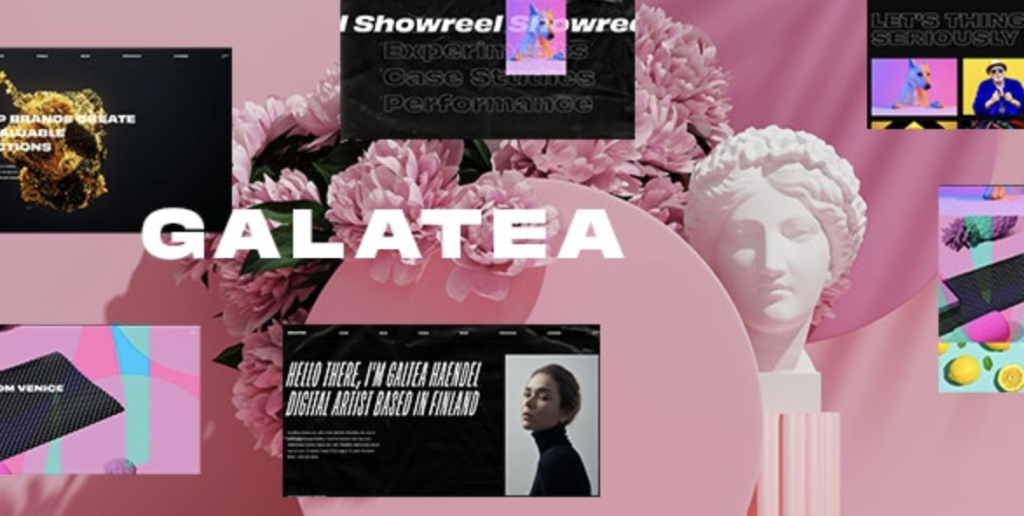
Galatea: Technical Overview & Architecture
Galatea – Creative Portfolio WordPress Theme is a minimalist portfolio engine built on a lean WordPress theme architecture for freelance photographers, digital agencies, and design studios. Its template layer keeps DOM depth shallow and removes decorative wrapper elements, so image-heavy galleries render without structural bloat even when a single archive lists more than fifty project entries. An AJAX routing layer intercepts internal link clicks, fetches the target page fragment in the background, and swaps the main content container, which means page-to-page navigation completes without a full browser reload while scroll position and transition states are preserved.
Content assembly runs through an intuitive drag-and-drop page builder, so every section — portfolio grids, case-study blocks, and typography stacks — is composed visually and exported as clean, nested-free markup. A centralized customization panel in the WordPress Customizer exposes more than a dozen parameters, including global color tokens, typography scale, transition duration, grid gutter values, and header behavior toggles. The panel writes values to theme mods in real time, and a live preview pane renders each change before it is saved to the database.
Key Functional Features of Galatea for Modern Deployments
- Seamless AJAX Page Transitions: Internal navigation is intercepted by a JavaScript router that prefetches the destination URL, fades the content wrapper on a configurable timing curve, and injects the parsed HTML — eliminating white-screen reloads across the entire site.
- Dynamic Dark & Light Mode Switcher: A toggle in the header swaps CSS custom-property color tokens and persists the selection in localStorage, so returning visitors land on their preferred scheme without a flash of the wrong palette.
- Diverse & Customizable Portfolio Grids: Multiple grid layouts — masonry, packed, and split-column — are configurable per page, with adjustable gutters, aspect ratios, hover overlay styles, and filtering driven by taxonomy terms rather than duplicate page loads.
- Interactive Mouse-Driven Animations: Cursor-tracking transforms apply GPU-accelerated translate and scale operations to grid items and hero media, with delta-based easing that throttles updates to animation frames to avoid layout thrash.
- Full E-Commerce Integration: Native WooCommerce support registers dedicated templates for product archives and single-product pages, so the theme can operate as a storefront for prints, digital assets, or design services without custom coding.
- Responsive Optimization for All Screen Sizes: Layouts are driven by fluid grids and relative typography units, with breakpoint-specific image sizing and touch-friendly hit areas validated against mobile, tablet, and ultrawide desktop viewports.
Production Deployment & Use-Case Scenarios
- Freelance Photographer Portfolio: A single masonry grid archive presents full-resolution galleries with AJAX-filtered categories, letting clients browse hundreds of images without pagination interruptions or repeated asset downloads.
- Digital Agency Case-Study Site: Design studios publish detailed project breakdowns using split-column layouts and long-form typography blocks, presenting client work in an organized narrative structure that supports service inquiries.
- Multi-Author Creative Collective Blog: A team of illustrators and writers shares industry insights through a multi-author blog format, with author archives, taxonomy-driven filtering, and WooCommerce integration for selling prints or workshop seats.
Technical Architecture & Compatibility Standards
The theme targets PHP 8.x environments and follows current WordPress coding standards, registering templates, scripts, and styles through native hooks rather than bypassing the loader. Front-end assets are enqueued conditionally, so CSS and JavaScript for inactive components never ship to the browser. Core Web Vitals budgets are respected through deferred script loading, responsive image sourcesets, and layout containers with reserved aspect-ratio space to prevent cumulative layout shift during media loads.
Compatibility extends to the standard WordPress plugin ecosystem, including WooCommerce, popular SEO plugins, caching layers, and translation frameworks with full RTL stylesheet support. The centralized options panel keeps every configuration decision in one location, and template overrides can be applied through a child theme without modifying parent files, preserving a clean update path for future theme releases.
Frequently Asked Questions
Does Galatea support WooCommerce for selling artwork or digital products?
Yes, the theme ships with dedicated WooCommerce templates for product archives and single-product pages, so photographers and studios can sell prints, digital downloads, or services directly from their portfolio site.
Can I switch between dark and light modes without editing CSS?
Yes, a built-in header toggle swaps the active color scheme through CSS custom properties and stores the visitor’s choice in localStorage, applying it automatically on their next visit.
Does Galatea require coding knowledge to build portfolio pages?
No, all layouts — including portfolio grids, case-study sections, and headers — are assembled through a drag-and-drop page builder, and pre-built templates can be edited visually without touching HTML or PHP.
Can the AJAX page transitions be disabled if I prefer standard navigation?
Yes, the transition system is controlled from the theme options panel, where you can adjust the timing curve or disable AJAX routing entirely and revert to conventional full-page loads.
Does the portfolio WordPress theme perform well on mobile connections with large image galleries?
Yes, images are served through responsive sourcesets with breakpoint-specific sizing, scripts are deferred, and grid containers reserve aspect-ratio space, which keeps Core Web Vitals metrics within target thresholds on constrained networks.
-
1.1.5 LatestSeptember 27, 2026