Zig Zig Pro: (Android Studio+Admob+Reward Video ads+Inapp purchase+Leaderboards)
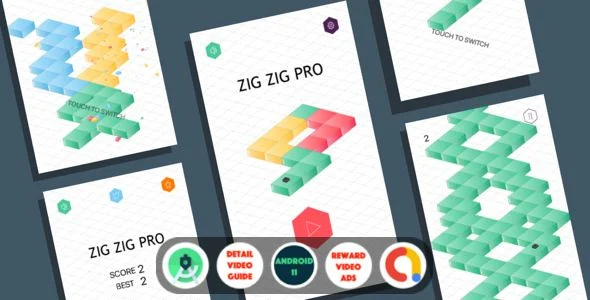
Zig Zig Pro Overview & Mobile Game Source Architecture
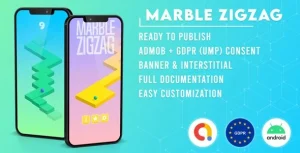
Zig Zig Pro is a Kotlin 1.x Android hyper-casual game source package built on a Cocos2d-x rendering core, engineered for mobile studios and indie publishers to ship a one-tap zigzag arcade title to Google Play without deploying heavyweight engines such as Unity. The package eliminates the engine-configuration bottleneck: gameplay logic, AdMob monetization across banner, interstitial, and rewarded video formats, Google Play in-app purchase flows, and leaderboard synchronization arrive pre-wired inside a standard Android Studio project that exports directly to APK. Within an agency delivery pipeline, the codebase operates as a reskin-ready production asset, with HD graphics, character unlock logic, share, rating, and reset flows already implemented so engineering effort concentrates on artwork replacement and store submission.
Technical Specifications & Deployment Matrix
| Engineering Metric | Deployment Specification |
|---|---|
| Base Technology / Framework | Cocos2d-x game core wrapped in a Kotlin 1.x Android Studio project |
| Runtime / Language Requirements | Android 9.0 through Android 13.0 target environments |
| Delivered File Formats | .apk, .dex, .so, .dat, .java, and .xml source artifacts |
| Data Exchange / Communication Protocols | AdMob SDK (banner, interstitial, rewarded video), Google Play Billing, Google Play Games leaderboards, OneSignal push notifications (extended tier) |
| Engine Dependencies | No Unity or external engine required; native Cocos2d-x libraries compile into the APK build |
| Persistence Footprint | Local .dat-backed state for scores, unlocked characters, and reset operations |
Zigzag Input Pipeline & Monetization Execution Flow
The core mechanism is a single-tap direction toggle driving a square along a zigzag path. Every touch event dispatched from the Android view layer crosses into the Cocos2d-x scene graph, where a lightweight state machine inverts the current heading vector of the moving square. Collision boundaries define the walls of the path; when the square intersects a boundary, the run terminates, the accumulated segment count converts into score, and the result posts to the Google Play leaderboard through the Games services API. This input-to-render cycle stays battery-efficient because the native engine handles frame updates without a managed-language game loop, which is why the architecture avoids the memory overhead typical of larger cross-platform engines.
Architectural & Functional Highlights
- Tri-format AdMob integration: banner, interstitial, and rewarded video units are implemented in the Java/Kotlin activity layer, letting rewarded views gate character unlocks while interstitials fire between runs.
- Google Play Billing pipeline: in-app purchase flows for remove-ads and unlockable content route through standard Play Billing callbacks in the native Android layer rather than custom payment code.
- Leaderboard synchronization: score submission binds run results to Google Play Games leaderboards, giving each session a competitive retention loop without additional backend infrastructure.
- Progression and retention logic: multiple unlockable characters, a smart rating screen timed to lift store ratings, share and more-games buttons, and a reset function that clears local progress on demand.
- Native and managed split: game logic compiles into .so native libraries, while ads, billing, and UI chrome run in the managed Android layer, keeping reskin scope isolated from engine internals.
For teams assembling a broader mobile portfolio rather than extending a single codebase, Notofy exists as a separate standalone Android template addressing the reminder and task-notification vertical.
Production Implementation & Operational Resilience
Deployment runs entirely through Android Studio: developers open the project, compile, export the APK, and submit to Google Play, with the codebase already conforming to current Play Store guideline checks. The reskin workflow targets asset replacement boundaries only — graphics, UI elements, and the bundled soundtrack can be swapped by following the included step-by-step video guide, meaning a person without programming knowledge can complete a visual rebrand without touching the native .so logic. An extended commercial tier widens the runtime surface: remove-ads configuration, the Buildbox project file, OneSignal push notifications, alternative ad providers including MoPub, Facebook, and Huawei networks, plus build variants for the Galaxy Store, Huawei, and Xiaomi storefronts. Operational safeguards are built into the experience layer: the privacy policy and info screens ship with the UI, and the smart rating screen gates its prompt to avoid review fatigue. Studios that need a different product vertical sharing this same AdMob-and-billing monetization stack can evaluate DocScanner as an independent document-scanning template outside this game’s codebase.
Frequently Asked Questions
Are compiled native libraries included in the delivered files?
Yes, the download contains .so native libraries alongside .dex, .java, .xml, and .dat artifacts, plus a working .apk, so the project builds without sourcing external engine components separately.
Can the game be published to app stores other than Google Play?
Yes, the extended tier supplies Android code variants prepared for the Galaxy Store, Huawei, and Xiaomi distribution channels, allowing multi-store publication from the same core gameplay architecture.
Is a rewarded video ad unit available alongside banner and interstitial formats?
Yes, all three AdMob formats ship implemented in the monetization layer, with rewarded video tied to unlockable character content and interstitials placed between gameplay runs.
Does the package require Unity or another third-party engine to compile?
No, the game runs on a Cocos2d-x core packaged inside Android Studio, so developers export the APK using standard Gradle builds without installing any external game engine.