Word Fun Game
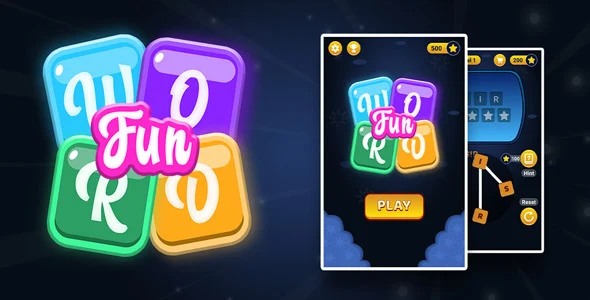
Word Fun Game Overview & Interactive Engagement Layer
Word Fun Game is a WordPress plugin built to embed playable word puzzle interfaces into posts, pages, and widget regions through a single shortcode call. The module targets a concrete publishing bottleneck: static article layouts suppress session duration and time on page, while editorial teams without development resources cannot ship interactive elements without modifying theme templates. Within production workflows, the package functions as a self-contained engagement layer for educational portals, community blogs, and online magazines, letting content editors deploy puzzle-driven experiences inside their existing publishing routine.
Technical Specifications & Deployment Matrix
| Engineering Metric | Deployment Specification |
|---|---|
| Base Technology / Framework | WordPress plugin: server-side PHP rendering combined with front-end HTML, CSS, and JavaScript assets |
| Runtime / Language Requirements | Standard WordPress hosting stack (PHP and MySQL); no additional runtime dependency documented |
| Data Exchange / Communication Protocols | Shortcode attribute parsing during WordPress content rendering; puzzle definitions supplied as word and hint pairs |
| Front-End / Engine Dependencies | Self-contained front-end assets; no external framework or library dependency documented |
| Database / Persistence Footprint | Word lists and hints persisted through the WordPress data layer; no separate database engine documented |
Shortcode Rendering Pipeline & Puzzle Data Flow
The core mechanism is shortcode expansion: WordPress parses the plugin’s shortcode token during content processing and substitutes fully assembled puzzle markup at that exact position. An editor defines a word and hint set through the word-list management interface; the definition is persisted and bound to the shortcode instance placed in the content area. At request time, the standard content filter expands the token, injecting the puzzle grid, hint data, and color parameters into the rendered document. Because expansion occurs inside the native content pipeline, output appears consistently in post bodies, standalone pages, and widget zones such as sidebars without template modifications.
This flow scales across editorial verticals. A history publication can maintain puzzle sets built on historical figures and events, while a culinary site runs ingredient-themed games, each set bound to a distinct shortcode instance with its own color scheme. Vertical-specific WordPress themes, such as a finance advisory site built on Consulting, accept these engagement modules without a developer editing template files, since the rendering contract is the shortcode, not the theme hierarchy.
Architectural & Functional Highlights
- Unlimited word and hint definitions: The word-list layer imposes no documented cap on entries, so editors maintain parallel puzzle sets per category, course, or campaign and swap them per shortcode instance.
- Per-instance color scheme parameters: Palette values can be tuned to match an existing brand identity, aligning the puzzle’s visual chrome with the surrounding theme without CSS overrides.
- Responsive rendering engine: Layout adapts across desktop, tablet, and mobile viewports, so a single puzzle definition serves every device class in the audience.
- Lightweight asset footprint: The codebase ships without heavy bundled frameworks, keeping added page weight minimal relative to the WordPress baseline load.
Production Implementation & Operational Resilience
Deploying the module in agency client environments follows the standard WordPress plugin activation path: upload, activate, configure word lists, and embed the shortcode in staging content before promotion to production. Because puzzle delivery rides the content rendering cycle rather than a separate endpoint, validation effort concentrates on theme compatibility—confirm that shortcode output inherits the active theme’s typography container and that widget-area placement renders within the sidebar’s width constraints.
Localization is a text-domain workflow: translators work from the included .pot file to produce localized string sets for any target language, and no source-file editing is required. Input handling is optimized for touch screens, a relevant factor for accessibility-focused deployments; care-sector portals such as those running WellPress can position puzzles where older visitors interact primarily through tablets. Operational boundaries are front-end scoped: the plugin renders puzzles wherever shortcodes execute and exposes no documented back-end API, cron routine, or external service call, which narrows the failure surface to markup, styling, and input handling. Since no third-party CDN or external JavaScript dependency is documented, the game’s availability tracks the site’s own uptime, keeping page-weight budgets manageable for performance-sensitive projects.
Frequently Asked Questions
Can visitors complete puzzles on touch-screen devices without a physical keyboard?
Yes, the interface is optimized for touch input, so players interact through direct taps on phones and tablets rather than keyboard entry, and the responsive layout keeps interactive targets usable across screen sizes.
Does the package include a translation template for localizing the interface?
Yes, a .pot file ships with the plugin, exposing interface strings for translation into any language through standard WordPress localization tooling without modifying the plugin’s source files.
Will adding the game noticeably slow down page loads?
No, the codebase is documented as lightweight and fast-loading, engineered to avoid degrading site speed; no specific benchmark figures are published, so load impact should be verified against the target hosting environment.
Can puzzles render inside widget areas such as sidebars, or only in post and page bodies?
Yes, shortcode embedding is documented for widget areas in addition to posts and pages, so a puzzle can occupy a sidebar slot wherever the active theme renders its widget zones.