Water Race – (Unity – Admob – Game)
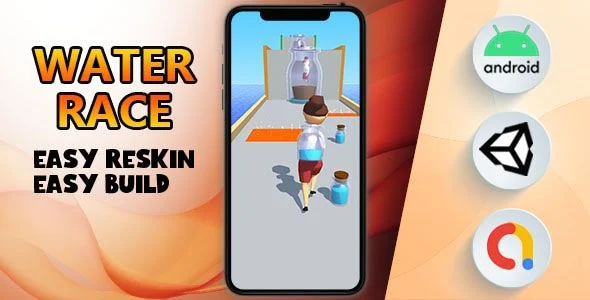
Water Race Overview & Mobile Game Foundation Architecture
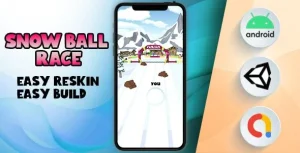
Water Race is a Unity-engineered hyper-casual mobile game source code package, built for indie developers and studios that need to ship a monetized runner title without rebuilding the foundational gameplay loop. The package eliminates the heaviest engineering bottleneck in mobile game delivery: authoring an endless, procedurally generated track system, ad-network wiring, and store-ready build pipelines from scratch. Within an agency or solo production workflow, it functions as a deployable foundation where art, levels, and monetization parameters are swapped rather than reprogrammed, collapsing weeks of groundwork into a configuration task. For teams comparing alternate starting points on a different runtime, a native Android path such as Tic Tac Toe Challenge exists as a decoupled option outside the Unity stack.
Technical Specifications & Deployment Matrix
| Engineering Metric | Deployment Specification |
|---|---|
| Base Technology / Framework | Unity game engine, hyper-casual runner architecture |
| Runtime / Language Requirements | 64-bit architecture builds; C#-based Unity project structure |
| Monetization / Communication Layer | Google AdMob SDK — banner, interstitial, and rewarded formats |
| In-App Purchase Layer | Configured IAP route for ad-removal purchases |
| Target Build Outputs | Android App Bundle (.aab) and iOS store packages |
| Asset / Persistence Footprint | Sound effects and visual assets bundled within the project |
Procedural Track Generation & Monetization Execution Pipeline
The core runtime mechanism is an endless, procedurally generated track assembled from segment data as the player advances. Instead of hand-authoring one fixed course, the engine stitches track sections together at runtime, so each session presents a different sequence and replayability is a structural property of the data model rather than scripted content volume. Player input is deliberately reduced to a one-tap control scheme, which keeps the input-handling layer thin and widens the addressable audience on low-spec devices. The project layout is organized so designers can locate gameplay, UI, and monetization modules without traversing a tangled dependency graph.
Core Technical Capabilities of Water Race
- Procedural endless track engine: Track sections are generated on demand during play, removing fixed-level authoring from the content pipeline and ensuring no two runs repeat identically.
- Triple-format AdMob integration: Banner, interstitial, and rewarded ad units are wired into the codebase, so revenue logic operates across display, transition, and opt-in placements without additional SDK plumbing.
- Dual-stream monetization via IAP: A pre-configured in-app purchase path lets players buy an ad-free experience, running parallel to the ad stack and giving product owners two revenue models in a single build.
- No-code level editor: A built-in editor tool allows new game sections to be assembled without writing scripts, shifting level production from programmers to designers.
- Store-ready build outputs: The project compiles to 64-bit Android App Bundles and iOS packages, satisfying current store architecture requirements for both major platforms.
Production Implementation & Operational Resilience
Deployment centers on re-skinning and configuration rather than architectural surgery. Because the monetization layer is already bound to AdMob, the practical pre-deployment checklist is limited to supplying your own AdMob unit identifiers, replacing bundled art and sound assets where branding demands it, and validating build signatures for each store target. The 64-bit compatibility requirement matters operationally: Google Play rejects 32-bit-only submissions, and this package sidesteps that rejection path by producing compliant App Bundles natively. For iOS distribution, the same Unity project compiles toward App Store packaging, so one codebase feeds both storefronts and divergence is confined to platform-specific build settings. Teams shipping multiple titles on compressed schedules can treat this pipeline as a template; for a parallel native-studio effort on Android, Penguin Adventure represents an independent Android Studio production route with its own AdMob wiring, suited to studios that do not operate inside Unity. Resilience considerations include testing rewarded-ad failure states when network connectivity drops, confirming the IAP ad-removal flag persists across sessions, and profiling the procedural generator under extended play sessions to confirm memory behavior remains stable.
Frequently Asked Questions
Do I need to source external sound effects or visual assets to build a shippable version?
No, the package ships with the necessary sound effects and visual assets included, so a complete build can be compiled directly from the delivered project before any re-skinning work begins.
Can new game sections be created without writing C# code?
Yes, the built-in level editor produces new track sections through a visual authoring workflow, meaning designers can expand content without touching the underlying scripts or recompiling gameplay logic.
Is there a purchase path for players who want ads removed entirely?
Yes, an in-app purchase option is already configured in the codebase, allowing players to pay for an ad-free experience while the AdMob stream continues serving everyone else.
Does one project output builds for both Google Play and the Apple App Store?
Yes, the source code is optimized to produce Android App Bundles and iOS packages from the same Unity project, with platform differences handled through standard build configuration rather than forked codebases.