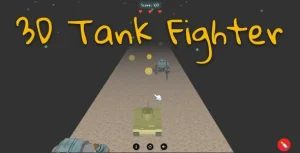
Tiny Runner | HTML5 Game Template

Tiny Runner Overview & Browser-Native 3D Runner Architecture
Tiny Runner is a Unity-engineered HTML5 game template compiled for browser playback, built for web developers and casual-game publishers who need a deployable 3D runner without authoring engine code from scratch. The package resolves the bottleneck of bringing Unity-authored 3D content to the web: it ships as prebuilt JavaScript and HTML artifacts that execute directly inside a WebGL-capable browser runtime, removing server-side compilation and plugin installation from the delivery chain. Within agency and portal workflows, it operates as a drop-in playable asset that can be embedded on gaming sites, reskinned as a branded runner title, or wrapped into a WebView container for hybrid distribution.
Technical Specifications & Deployment Matrix
The matrix below consolidates the verifiable runtime parameters documented for the package.
| Engineering Metric | Deployment Specification |
|---|---|
| Base Technology / Framework | Unity engine, exported to HTML5/WebGL output |
| Runtime / Language Requirements | JavaScript (JS) and HTML execution |
| Compatible Browsers | IE9, IE10, IE11, Firefox, Safari, Opera, Chrome, Edge |
| Front-End / Engine Dependencies | WebGL-capable browser only; no plugin installation documented |
| Data Exchange / Communication | Client-side execution; no backend service or database call documented |
| Database / Persistence Footprint | None documented; gameplay state remains within the browser session |
| Display Output | High-resolution assets (confirmed by vendor attribute) |
Unity WebGL Compilation & Gameplay Execution Pipeline
The core mechanism is a Unity-authored game loop compiled into JavaScript and HTML for WebGL rendering. At load time, the HTML entry document boots the JavaScript build, which preloads the scene assets and data payloads before the first playable frame is drawn. Once running, the render loop redraws the 3D course every frame while the player character advances at speed through a futuristic obstacle environment. Input events dispatched by the browser — keyboard presses and pointer interactions — are captured by the engine’s input layer and translated into evasive maneuvers, letting the player dodge obstacles and collect bonuses as the run progresses toward the finish line. Collision evaluation runs inside the same loop: contact with an obstacle produces the fail state, while bonus pickups increment the in-run score, making reaction timing the primary skill variable.
Because the entire experience executes client-side, the hosting layer only needs to serve the files correctly; there is no session handshake, authentication call, or database write between the browser and the server. For studios exploring standalone alternatives on a different authoring stack, Kitty Run provides a Construct 2/3 runner template that exists as an independent toolchain outside the Unity-to-WebGL pipeline described here.
Core Technical Capabilities of Tiny Runner
- Unity-to-WebGL build output: The deliverables are JavaScript JS and HTML files — the compiled browser build — so no Unity editor installation is required on the deployment target to run the game.
- Obstacle collision and evasion logic: The engine evaluates player position against course obstacles each frame, producing immediate fail states on contact and rewarding precise timing during high-speed sections.
- Bonus pickup and scoring loop: Collectible bonuses are tracked during the run, giving the gameplay loop a secondary objective beyond pure survival toward the finish line.
- High-resolution asset delivery: The build ships with high-resolution visuals, with final fidelity and frame pacing determined by the client device’s GPU and available graphics memory.
- Cross-browser runtime coverage: The vendor compatibility matrix spans Chrome, Edge, Firefox, Safari, Opera, and IE9 through IE11, allowing QA passes across both current and legacy engine versions.
Production Implementation & Operational Resilience
Deployment follows a static-hosting model: any web server or object storage setup capable of serving the JavaScript and HTML files can host the build, with no backend language runtime, database connection, or build step required at deploy time. When the build’s files are split across domains or served from a CDN, the hosting layer must send CORS headers that permit the WebGL loader to fetch its JavaScript and data payloads; a misconfigured header policy causes the build to fail before the first frame renders, which is the most common operational fault with this architecture. Rendering load is fully client-side, so frame rate scales with visitor hardware — devices with constrained graphics memory will show reduced frame pacing rather than server errors, and load testing should therefore target file delivery throughput rather than compute capacity. Customization boundaries matter for planning: the documentation does not advertise a public hook or API layer, so changes to visuals and tuning beyond the exposed game behavior require working at the engine-project level and re-exporting the build. For teams whose delivery target is native Android and iOS distribution rather than browser playback, Beans Runner Unity Platform Project exists as a separate Unity-authored mobile path with monetization support, outside this HTML5 runtime.
Frequently Asked Questions
Does the download include editable Unity scene files, or only the compiled browser build?
No, the documented deliverables consist of JavaScript JS and HTML files, which represent the compiled output ready for browser playback rather than the engine project files used during authoring.
Does the template require a backend server, database, or server-side scripting to run?
No, the package runs entirely from its static JavaScript and HTML files, so a standard static web host is sufficient and no database connection or server-side language runtime is involved.
Can the game be embedded into an existing web page instead of running only as a standalone site?
Yes, because the build consists of standard HTML and JavaScript artifacts, it can be embedded into an existing page through common framing techniques on any static hosting setup.