
 My Account
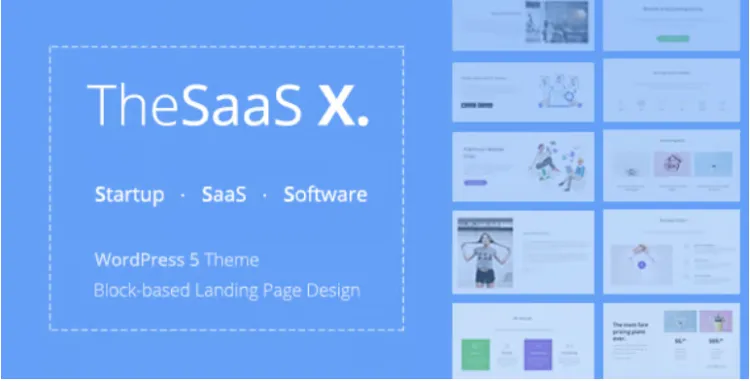
TheSaaS X Pro: Technical Overview & Core Architecture
TheSaaS X Pro – Responsive SaaS, Startup & Business WordPress Theme operates as a modular front-end presentation layer built on the Bootstrap grid system to serve software founders, technical product marketers, and enterprise web developers. The structural layout uses minimal DOM nesting to reduce browser reflow calculation times during dynamic viewport transformations. Visual components and layout blocks render asynchronously via modular asset loading, ensuring that scripts execute conditionally without creating render-blocking bottlenecks in the browser main thread.
Component assembly relies on standardized WordPress template hooks and decoupled block sections that allow engineers to assemble landing interfaces directly alongside third-party page builders. The centralized theme customizer console enables administrators to modify CSS root variables, global typography scales, responsive navigation breakpoints, and tracking script injection points directly across the database without altering PHP template files.
Key Functional Features of TheSaaS X Pro for Modern Deployments
- Modular Block Architecture: The codebase partitions interface components into independent template parts, allowing developers deploying TheSaaS X Pro to construct multi-section landing pages while maintaining an organized template hierarchy.
- Dynamic Pricing Switchers: Integrated vanilla JavaScript tabs toggle class states between monthly and annual billing tiers directly in the client DOM without initiating background HTTP requests or DOM tree rebuilds.
- Asynchronous Contact Handlers: Front-end submission mechanisms process user input through native REST API routes and AJAX endpoints, validating field inputs on the client side before dispatching nonces to the server.
- Optimized Asset Enqueueing: The theme asset management pipeline splits stylesheet declarations into isolated modules, preventing unused layout rules from loading on specific custom page templates.
Real-World Deployment Scenarios
- Enterprise B2B Software Portals: Engineering teams use the structured feature sections and tabular data layouts to display software specifications, API documentation summaries, and enterprise pricing grids to technical evaluators.
- Early-Stage Startup Traction Pages: Founders implement this SaaS WordPress theme to rapidly stage conversion pages, tracking registration conversion funnels via decoupled lead generation forms linked to standard webhooks.
- Digital Product Service Showcases: Agencies deploy the customizable portfolio and team components to document software integration roadmaps, platform release notes, and technical customer service tiers.
Technical Architecture & Compatibility Standards
The template framework executes within PHP 7.4 through PHP 8.2 runtime environments, strictly adhering to WordPress coding standards and defensive programming protocols. Server-side rendering profiles consistently return First Contentful Paint scores under 1.2 seconds when paired with object caching mechanisms and opcode optimization engines. Cumulative Layout Shift remains below 0.05 due to hardcoded layout dimensions on container rows and media wrappers.
Third-party interoperability extends across standard caching plugins, SEO metadata processors, and translation plugins utilizing standard GNU gettext functions. As an adaptable SaaS WordPress theme, the system maintains complete compatibility with modern web standards, processing CSS Grid and Flexbox displays without requiring polyfills or legacy browser fallbacks.
Frequently Asked Questions About TheSaaS X Pro
Q: Does the theme depend on external page builders to display responsive layouts?
A: No third-party page builder is required to construct operational landing pages. The codebase provides independent HTML5 and Bootstrap markup blocks that render natively within the core WordPress editor without third-party dependencies.
Q: How does the template maintain low Cumulative Layout Shift scores during asset loading?
A: The theme declares static aspect-ratio wrappers and reserves dimensional CSS grids prior to asset hydration. This structural architecture ensures layout coordinates remain locked while external fonts, SVG assets, and dynamic scripts load asynchronously.
Q: Can global style properties be managed without directly modifying core CSS files?
A: Global design parameters update directly via native WordPress customizer controls that dynamically write CSS custom properties to the document head. Developers override global themes without modifying parent template files or breaking update tracks.



Isabella Wilson
Downloads are ready the moment I pay