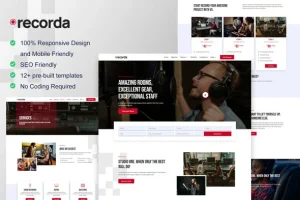
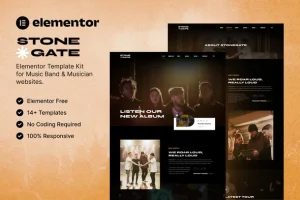
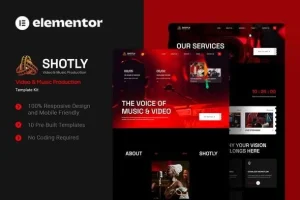
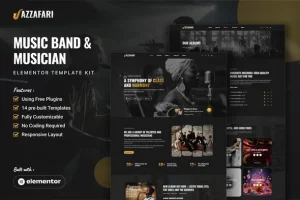
Symphonize – Music Festival Event & Band Elementor Template Kit
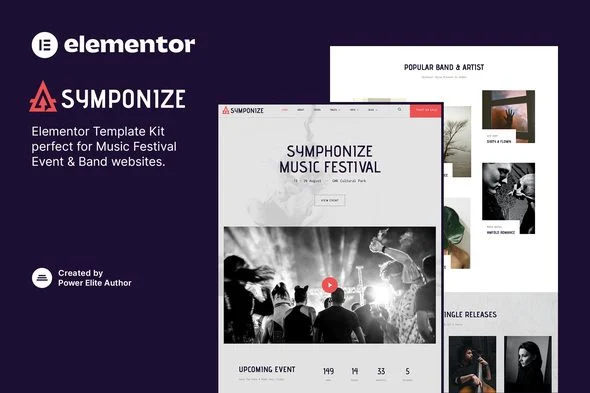
Symphonize: Technical Overview & Architecture
Symphonize – Music Festival Event & Band Elementor Template Kit is a pre-built Elementor page collection engineered for music festival organizers, touring bands, and independent DJs who need a production-grade website without touching code. Each template ships with a flattened DOM structure, so a full artist-lineup grid containing 20+ performer cards renders without the nested wrapper divs that typically inflate layout cost on content-heavy pages. Content edits propagate through Elementor’s client-side rendering cycle: modifying a schedule widget or lineup card triggers a targeted re-render of the affected node tree instead of a full document reload, keeping the editor session responsive during high-density page assembly.
Component assembly runs entirely inside the Elementor drag-and-drop engine, with every template imported as a JSON page definition that maps directly onto native Elementor containers, widgets, and global styles. A centralized kit-wide settings layer controls at least four operational parameters: global color tokens for the dark-stage aesthetic, typography scales for headline and body styles, header and footer variants reused across all 15+ pages, and responsive breakpoint behavior for tablet and mobile viewport stacking. Because these parameters are centralized, changing the primary accent color once updates every template instance, eliminating per-page style duplication.
Key Functional Features of the Symphonize Kit
- 15+ Professionally Structured Templates: The kit includes a homepage, About Us, Artist Lineup, Event Schedule, blog layouts, plus dedicated Contact, FAQ, and 404 pages, each delivered as an importable Elementor page definition with pre-wired section spacing and widget hierarchies.
- Dark-Aesthetic Design System: Bold display typography and high-contrast layouts are tokenized through Elementor global styles, so festival branding, artist imagery, and media blocks can be re-skinned site-wide by editing color and font variables rather than individual widgets.
- Fully Responsive Layout Engine: Every section uses container-based flex layouts that re-stack at tablet and mobile breakpoints; lineup grids, schedule tables, and ticket CTAs reflow automatically without requiring separate mobile page variants.
- Performance-Optimized Asset Loading: Templates minimize external asset dependencies by relying on Elementor’s native widget set, reducing render-blocking requests and supporting Core Web Vitals targets for LCP and CLS on shared hosting environments.
- Cross-Browser Compatibility: Layouts are verified against Chrome, Firefox, Safari, and Edge rendering engines, with consistent flexbox and grid behavior across current browser versions on desktop and mobile.
- Conversion-Focused Page Flow: Ticket CTAs, schedule blocks, and artist profiles are positioned to move visitors from discovery to action, with reusable button and form patterns that connect to standard WordPress contact and ticketing integrations.
Real-World Deployment Scenarios
- Multi-Day Music Festival Site: An organizer combines the Artist Lineup and Event Schedule templates with the homepage hero to publish full performer profiles, day-by-day running orders, and ticket information; content updates during the festival week require only widget edits in the Elementor editor.
- Independent Band Promotional Website: A four-piece band deploys the homepage, About Us, and blog layouts to publish tour announcements, embedded media, and merchandising CTAs, reusing the kit’s dark visual system across every page for consistent branding.
- DJ and Solo Artist Landing Presence: A touring DJ builds a single-page-style flow by chaining the homepage hero, schedule section, and Contact template, directing booking inquiries straight into a standard contact form widget with no custom development work.
Technical Architecture & Compatibility Standards
Symphonize runs on WordPress with the Elementor page builder as its only structural dependency, requiring a current PHP 7.4+ or PHP 8.x hosting environment and a standard LAMP or LEMP stack. Page templates import through Elementor’s native template library workflow, and all layouts target Core Web Vitals thresholds by limiting DOM depth per section, deferring non-critical assets, and using responsive image sizing that prevents cumulative layout shift during load.
Interoperability covers current versions of Chrome, Firefox, Safari, and Edge, along with standard WordPress plugin ecosystems for contact forms, SEO, and ticketing integrations. Because the kit is built on Elementor’s native widget and container architecture rather than proprietary shortcodes, exported pages remain editable, portable between staging and production environments, and compatible with future Elementor container-based updates.
Frequently Asked Questions
Does Symphonize require any coding knowledge to build a complete music event website?
Yes, the entire kit operates through Elementor’s drag-and-drop editor, and every template imports as a fully editable page. Text, images, colors, and schedule entries are modified visually, with no HTML, CSS, or PHP editing required at any point.
Can I use the Symphonize kit for a band website as well as a festival site?
Yes, the included Artist Lineup, Event Schedule, and About Us templates work equally well for single-artist sites and multi-act festivals. Solo performers and DJs commonly publish tour dates and booking forms using the same schedule and contact layouts.
Does the kit include dedicated pages for FAQs, contact, and 404 error handling?
Yes, the package ships with pre-built Contact, FAQ, and 404 templates alongside the homepage, schedule, lineup, blog, and About Us pages, so every standard site section is covered without building layouts from scratch.
Will the templates load slowly on mobile devices with heavy artist imagery?
No, the templates use Elementor’s native responsive image handling and a minimal asset footprint, avoiding render-blocking libraries. Layouts are structured with shallow container nesting specifically to keep mobile rendering within Core Web Vitals performance targets.
Can I customize the dark color scheme to match my festival brand colors?
Yes, colors and typography are managed through Elementor global styles, so editing the accent or background tokens once updates all 15+ templates consistently, including buttons, headings, and footer elements across the entire site.