Specie – Cryptocurrency Admin Dashboard Template Bitcoin ICO Cards
Core Engineering & Data Architecture of Specie
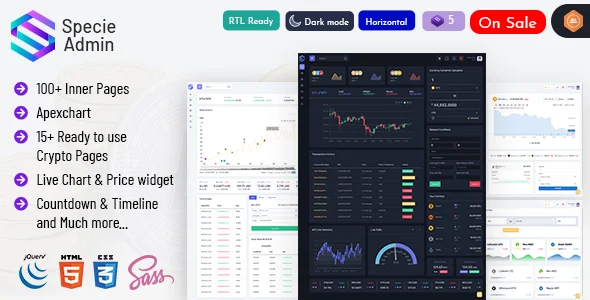
Specie – Cryptocurrency Admin Dashboard Template Bitcoin ICO Cards is a cryptocurrency admin dashboard template engineered specifically for blockchain project leads, fintech software engineers, and digital asset managers to streamline financial data visualization and decentralized transaction tracking. The interface architecture organizes complex telemetry into modular grid components, executing real-time data binding via asynchronous JavaScript fetches without causing layout shifts. Its presentation layer operates on lightweight, semantic HTML5 containers paired with modular CSS stylesheets, ensuring rapid rendering cycles and strict Document Object Model efficiency even during high-frequency price feed updates.
Key Functional Features of Specie for Modern Deployments
- Real-Time Market Telemetry: Charting libraries parse JSON payloads from external websocket endpoints to generate low-latency line, candlestick, and bar charts for Bitcoin and secondary digital tokens.
- Dynamic ICO Management Cards: Dedicated user interface modules track token distribution metrics, funding milestones, smart contract stage progression, and hard-cap thresholds via declarative CSS flexbox grids.
- Modular UI Component Library: Specie provides independent interface structures including user authentication forms, wallet management modules, data tables with client-side sorting, and detailed transaction ledger components.
- Responsive Breakpoint Normalization: Custom media queries enforce precise fluid layout transitions across viewport widths between 320 pixels and 2560 pixels, ensuring uniform layout stability on mobile devices, tablets, and multi-monitor workstations.
Operational Implementation Scenarios
- Centralized Exchange Operations: Administrators implement the cryptocurrency admin dashboard template to monitor customer verification states, incoming withdrawal queues, cold storage asset reserves, and order book velocity from a single pane of glass.
- Token Presale and Crowdfunding Portals: Development teams deploy the interface to provide angel investors and retail participants with live accounting of circulating supply, transaction confirmation statuses, and vesting schedule progress bars.
- Multi-Asset Portfolio Trackers: Financial engineering teams connect the presentation layer to institutional accounting databases to calculate aggregate net asset values and historical risk exposure across multiple distributed ledgers.
Environment Compatibility Standards
| Layer | Target Standards |
|---|---|
| Markup & Styles | Semantic HTML5, CSS3 Variables, Bootstrap Framework Grid |
| Scripting & Charts | ECMAScript 6+, Chart.js / ApexCharts integration dependencies |
| Browser Compatibility | Chromium 90+, Mozilla Firefox 88+, Apple Safari 14+, Microsoft Edge |
| Backend Interoperability | Agnostic REST API, GraphQL endpoints, Headless CMS architectures |
Frequently Asked Questions
How does the template handle high-frequency WebSocket data without degrading browser rendering performance?
The data visualization cards update via targeted DOM nodes rather than full container refreshes, enabling chart canvases to redraw strictly within standard 16-millisecond animation frame budgets.
Can the interface components integrate directly into a headless content management system or custom backend?
The semantic markup and decoupled script structure allow frontend developers to map JSON data contracts directly to the UI tables, state cards, and form handlers without modifying core layout styles.
Does the codebase support dynamic theme switching between dark and light modes at runtime?
The layout relies on scoped CSS custom properties that toggle palette values globally through a root dataset attribute, eliminating the need to re-fetch style assets or rebuild the DOM tree.