
Romancy – Hotel Booking WordPress Theme
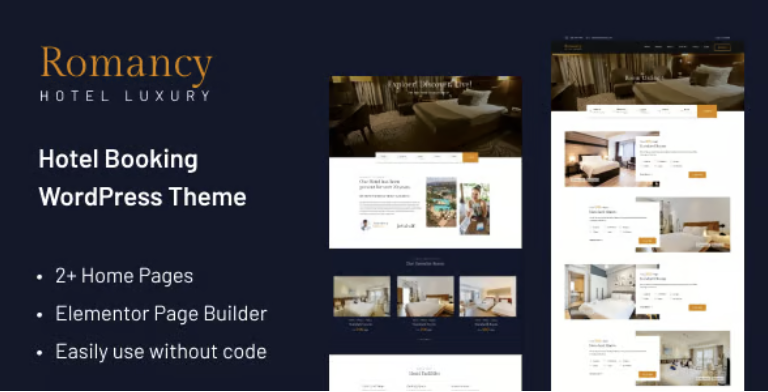
Romancy: Technical Overview & Architecture
Romancy – Hotel Booking WordPress Theme is a WordPress-based hospitality platform built around a native booking engine, engineered for hoteliers, resort managers, and vacation rental operators who need direct reservation capture without external channel dependency. Its template architecture keeps DOM depth shallow and consolidates booking UI components into modular partials, which reduces markup overhead when a property page renders dozens of room types, gallery blocks, and rate tables simultaneously. Availability lookups run through AJAX endpoints that query the reservation database and repaint the calendar, price breakdown, and room list inline, so guests never trigger a full page reload during date selection or occupancy changes.
Page assembly runs on Elementor drag-and-drop widgets, meaning every booking form, room carousel, and pricing module binds to the theme’s shortcodes and widget registry rather than relying on raw HTML embedding. From the centralized admin options panel you can configure seasonal rate windows, coupon discount rules, extra-service pricing (airport transfers, spa packages), room inventory counts, and email notification templates, all persisted as structured options rather than scattered post meta. The panel groups these parameters under distinct tabs for bookings, pricing, and appearance, so a single screen governs the full reservation pipeline.
Key Functional Features of Romancy for Modern Deployments
- Real-Time Availability Engine: The booking calendar issues AJAX requests on every date-range change, validates overlapping reservations against stored bookings in the database, and blocks unavailable dates within the same request cycle, returning an inline confirmation state instead of a page refresh.
- Seasonal Pricing & Rate Management: Administrators define date-bounded price tiers, apply per-room-type multipliers, and stack weekend surcharges on top of base rates; the checkout calculator resolves the final rate server-side before payment handoff to prevent client-side price tampering.
- Coupon & Discount Logic: Discount codes support fixed-amount and percentage-based reduction, configurable validity windows, usage caps, and minimum-stay conditions, with validation executed during the booking review step before the total is committed.
- Extra Services & Packages: Optional add-ons such as transfers, breakfast plans, or spa treatments attach to reservations as line items, each carrying its own pricing model (per guest, per night, or flat fee) rendered dynamically in the cost summary widget.
- Payment Gateway Integration: The checkout layer connects to leading payment gateways through adapter classes, separating transaction handling from booking persistence so a failed payment never writes an orphaned reservation record into the database.
Production Deployment & Use-Case Scenarios
- Boutique Hotel Direct Booking Site: A 12-room property deploys the hotel booking theme to replace an OTA-dependent funnel, publishing room-type pages with gallery modules and capturing reservations through the built-in engine while paying zero commission per stay.
- Multi-Unit Resort Operations: A resort with tiered inventory (standard, deluxe, villas) uses the room management dashboard to segment availability per unit class, apply high-season rates, and bundle airport transfers as billable extras attached to each booking record.
- Small Rental Directory Portal: An operator running several serviced apartments and bed-and-breakfast listings configures the framework as a multi-listing portal, letting each property carry its own calendar, pricing schedule, and image set while sharing a single global search interface.
Technical Architecture & Compatibility Standards
Romancy is engineered for current WordPress environments, running on PHP 8.x with MySQL/MariaDB, and its front-end assets are structured to hold Core Web Vitals targets — compressed CSS/JS bundles, lazy-loaded imagery, and deferred non-critical scripts keep LCP and CLS within Google’s thresholds on mobile-first layouts. The theme’s responsive breakpoints cover tablet and smartphone viewports natively, so booking forms and calendars reflow without horizontal scroll at common device widths.
Interoperability extends across the standard WordPress extension ecosystem: the theme registers its widgets and shortcodes through documented hooks, coexists with major SEO and caching plugins, and keeps its option panel decoupled from page-builder internals so Elementor updates do not break saved layouts. Translation-ready string wrapping and RTL stylesheet support make multi-language deployments viable without patching template files.
Frequently Asked Questions
Does Romancy check room availability in real time without reloading the page?
Yes, the booking calendar sends AJAX requests on every date change and validates availability against stored reservations, updating the price breakdown and room list inline without a full page refresh.
Can I set seasonal pricing and weekend surcharges per room type?
Yes, the rate manager supports date-bounded seasonal tiers, per-room multipliers, and weekend surcharges, with the final price resolved server-side at checkout to block client-side manipulation.
Does the theme require a third-party booking plugin to accept reservations?
No, the booking engine, availability calendar, coupon system, and payment handoff are built into the theme itself, so no external booking plugin is needed for core reservation workflows.
Can Romancy manage multiple properties or listings on one installation?
Yes, the framework supports multi-listing configurations where each property carries its own calendar, inventory, and pricing schedule, making it workable for small rental directories and multi-unit portfolios.
Can I build and edit layouts with Elementor using this hotel booking theme?
Yes, the theme registers dedicated Elementor widgets for booking forms, room carousels, and price tables, so layouts are assembled through drag-and-drop editing without touching template files.
-
1.3.4 LatestSeptember 27, 2026