Rhythm – One Multipage WordPress Theme
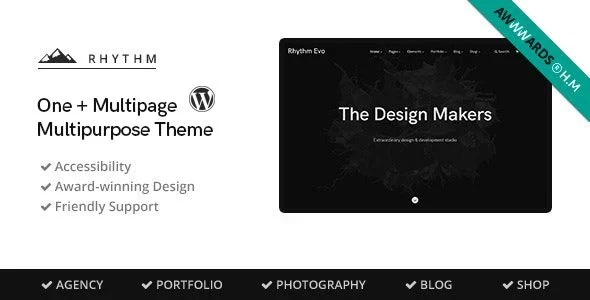
Rhythm One Multipage WordPress Theme Overview & Multi-Purpose Presentation Layer
Rhythm One Multipage WordPress Theme is a PHP and CSS-based multi-purpose theme engineered for agencies and independent developers to launch portfolio, corporate, photography, architecture, and e-commerce websites from pre-configured demo foundations. The package removes the bottleneck of composing multipage layouts from scratch by bundling more than 150 importable demos spanning light, dark, and Rhythm Original style variants, alongside 80+ WPBakery page builder elements that assemble sections without hand-written template code. Within agency delivery pipelines, it operates as the presentation layer running on WordPress 6.0.x through 7.0.x and rendering storefronts compatible with WooCommerce 7.x to 9.x.
Technical Specifications & Deployment Matrix
| Engineering Metric | Deployment Specification |
|---|---|
| Base Technology / Framework | WordPress theme built on PHP and CSS files, with WPBakery Page Builder and Slider Revolution bundled in the package |
| Runtime / Language Requirements | WordPress 6.0.x–7.0.x; cross-browser rendering verified on Chrome, Edge, Firefox, Safari, Opera, and IE11 |
| Data Exchange / Communication Protocols | AJAX-driven search results, po/mo translation files, WPML compatibility, embedded media from YouTube, Vimeo, and SoundCloud |
| Front-End / Engine Dependencies | WPBakery Page Builder, Ultimate Addons, Slider Revolution, Contact Form 7 design integration, Font Awesome, Google Fonts |
| Database / Persistence Footprint | Runs on the native WordPress schema through custom post types for portfolios and testimonials; no proprietary database layer is introduced |
WPBakery Rendering Engine, Template Overrides & Demo Import Pipeline
Rhythm renders content by routing inbound requests through overridden WordPress template hierarchy files. A page request resolves against the standard hierarchy — front-page, page, single, and archive templates — before the engine parses WPBakery shortcode payloads stored in post content and expands them into full-width DOM sections. Builder modules enqueue their own stylesheet and script queues, while the theme options panel persists hundreds of configuration values — header variants, sticky navigation, mega menu depth, footer layouts, and unlimited color schemes — as theme modifications read at render time.
The demo import pipeline is the primary acceleration mechanism for production builds. Each of the 150+ demos ships as a set of pre-designed pages that can be imported wholesale, so a deployment starts from finished layouts rather than empty canvases. Typography resolves through Google Fonts plus system font stacks, with per-page and per-post option overrides. WooCommerce integration happens at the template level: shop, product, and catalog views inherit themed designs without custom template files. Because the builder layer is WPBakery-based, its shortcodes do not translate to Elementor containers; studios evaluating an Elementor-native track as a separate project path can weigh Vault, which covers comparable multipage territory under a different builder architecture.
Architectural & Functional Highlights
- Demo Import Pipeline: 150+ demos across light, dark, and original styles import complete page sets, collapsing multi-day layout work into a configuration task.
- 80+ Page Builder Elements: Shortcode-based modules — sliders, portfolio grids powered by Cubeportfolio, testimonial blocks, and counters — compose sections in the backend or frontend editor.
- WooCommerce Template Integration: Shop, product, and checkout views inherit themed styling across WooCommerce 7.x–9.x, including archive dropdown behavior documented in recent fixes.
- Search & Widget Layer: AJAX search returns results without page reloads, and seven built-in custom widgets extend sidebars and footer regions beyond core defaults.
- Localization & RTL: po/mo files, WPML readiness, and RTL support let one codebase serve left-to-right and right-to-left locales.
Production Implementation & Operational Resilience
Deployment follows the standard activation path: upload, activate, then run the demo importer before replacing content. A basic child theme ships in the package, so template and function modifications persist across parent updates without editing distributed files directly. Theme updates install through the WordPress dashboard rather than requiring FTP transfers, and the changelog shows bundled plugins — WPBakery, Slider Revolution, Ultimate Addons, and Contact Form 7 — version-bumped in lockstep with each theme release.
Operational boundaries worth noting before staging: Slider Revolution updates trigger an automatic migration routine on first open, so sliders should be backed up beforehand, a precaution the release notes state explicitly. The codebase has undergone successive PHP 8+ notice remediation, indicating active maintenance of runtime compatibility. Multi-language deployments rely on WPML rather than built-in translation management. For consultancies scoping strictly corporate and consulting deliverables where a dedicated business archetype fits better than a generalist multipage system, Variety exists as an independent alternative on the same platform. Documentation ships as a well-structured help file with video walkthroughs covering setup and option configuration.
Frequently Asked Questions
Are layered PSD source files included in the downloadable package?
Yes. The distribution contains PHP files, CSS files, and PSD source documents, giving designers editable mockups for prototyping header, footer, and page compositions before implementation inside the theme.
Can the theme be updated directly from the WordPress admin dashboard?
Yes. A dashboard-level update path replaces manual FTP transfers, and the changelog records iterative releases that refresh the bundled builder and slider plugins alongside theme fixes, keeping the stack aligned over time.
Are the images shown in the live preview bundled with the theme?
Yes. Every image displayed in the preview is included in the package, so imported demos render identically to the presentation without sourcing replacement visuals or rebuilding gallery compositions.
-
10 July 2023 LatestSeptember 23, 2026