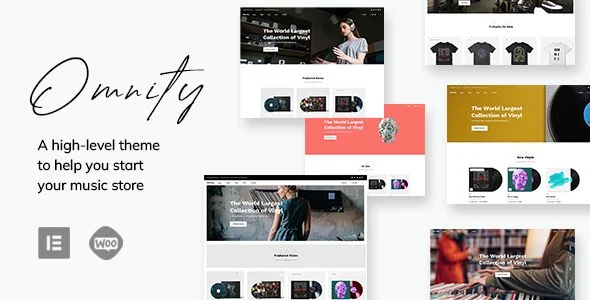
Omnity – Music Store WordPress Theme
Omnity: Technical Overview & Architecture
Omnity – Music Store WordPress Theme is a dark-interface WordPress theme engineered for independent artists, record label managers, and touring event promoters who need audio playback, merchandise sales, and event publishing inside a single installation. The theme ships with a trimmed DOM tree and consolidated stylesheet delivery, keeping rendered markup lean on discography pages that list dozens of album entries and track rows. Track interactions, playlist additions, and cart updates run through AJAX endpoints that exchange JSON payloads with the server, so the audio player keeps playing while UI states update without a full page reload.
Page assembly integrates natively with the Elementor page builder, exposing Omnity widgets for players, tracklists, event calendars, and artist rosters that can be dragged into any layout and bound to custom post type data. The centralized theme options panel, built on the WordPress Customizer API and a Redux-style settings framework, lets administrators control at minimum four parameter groups: typography scale and font stack selection, color scheme and accent overrides, audio player behavior including autoplay restrictions and default volume, and shop layout variables such as product grid columns and gallery zoom states.
Key Functional Features of the Omnity Theme for Modern Deployments
- Advanced Music Player with Playlist Support: A sticky, session-persistent audio engine handles continuous playback across page navigations, loads track metadata asynchronously, and stores playlist state in browser localStorage so listeners resume where they stopped.
- Full WooCommerce Integration: Product single templates render variable merchandise options such as apparel sizes and vinyl formats through native WooCommerce hooks, with cart and checkout flows inheriting the dark design tokens without template overrides.
- Elementor Page Builder Compatibility: Dedicated widgets map to the discography, events, and artist custom post types, pulling server-side queries that respect pagination and caching layers rather than duplicating database requests.
- Pre-Designed Discography & Events Pages: Album grids bind featured artwork to embedded tracklists, while the events archive surfaces venue, date, ticket link, and map data through structured markup that search engines can parse as event entities.
- Responsive and Mobile-First Design: Layouts are authored from a 360px viewport baseline, with the player collapsing into a bottom-anchored mini bar that stays out of iOS and Android safe-area insets.
- Event Management System Integration: Tour date modules accept recurring event configurations, export calendar feeds, and link each listing to ticketing URLs defined per venue or per promoter.
Real-World Deployment Scenarios
- Independent Band Hub: A four-piece group consolidates its Bandcamp embeds, tour schedule, and t-shirt inventory into one domain, running the player continuously while fans browse dates and add vinyl to cart in the same session.
- Record Label Roster Site: A label publishes artist profile pages, new-release announcements, and a unified store for albums and apparel, using the events archive to promote showcase nights across its entire roster.
- Music Blog & Event Organizer: A regional publication reviews releases on discography-styled layouts and runs a recurring gig calendar, monetizing traffic through affiliate merch listings served through the WooCommerce product structure.
Technical Architecture & Compatibility Standards
Omnity runs on PHP 8.0 and above, registers its custom post types and taxonomies through standard WordPress APIs, and loads its scripts via conditional enqueueing so that the player bundle only downloads on pages containing audio content. The codebase targets Core Web Vitals thresholds with deferred non-critical JavaScript, responsive image markup via srcset attributes, and font loading strategies that prevent layout shift during typography hydration.
Compatibility extends to popular stack extensions including WooCommerce variable and downloadable products, multilingual plugins for translated discography entries, and caching solutions that respect the AJAX endpoints powering playback and cart updates. Because the music WordPress theme relies on documented hooks and filters rather than core file modifications, routine WordPress and plugin updates can be applied without breaking the music store theme layout or its widget bindings.
Frequently Asked Questions
Does Omnity keep the audio player running while visitors browse other pages?
Yes, the sticky player persists across page navigations through AJAX content swapping and localStorage state, so playback continues without interruption while users move between discography, events, and shop pages.
Can I sell both digital downloads and physical merchandise through Omnity?
Yes, the theme maps to WooCommerce’s native downloadable and variable product types, so a single store can deliver MP3 or WAV files alongside apparel, vinyl, and bundled formats with shipping rules intact.
Does the theme require the Elementor page builder to function?
No, core templates including discography, events, and shop archives render through standard WordPress template files, and Elementor is an optional layer for custom layouts using the bundled widgets.
Can I import tour dates from an external calendar feed into the events system?
Yes, the event management integration supports calendar feed imports and iCal-compatible exports, allowing promoters to publish recurring dates without re-entering venue and schedule data.
Is the theme optimized for search engine indexing of albums and events?
Yes, discography and event templates output structured data markup with schema-appropriate entities, giving search engines machine-readable track, album, and event information for enhanced result displays.
-
1.3.8 LatestSeptember 20, 2026