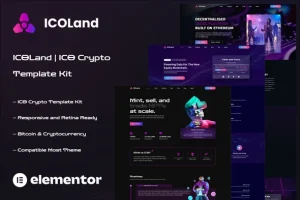
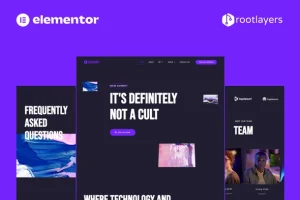
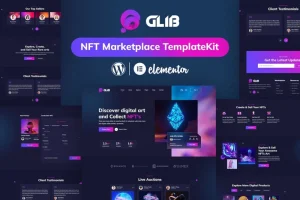
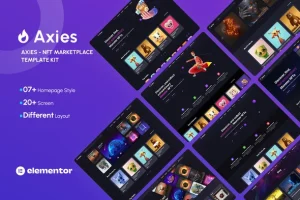
NFTku – NFT Project Elementor Template Kit
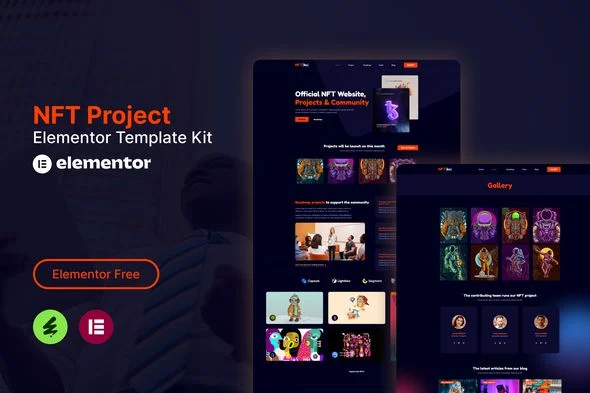
NFTku Overview & Layout System for NFT Project Websites
NFTku is an Envato Template Kit built for the Elementor page builder, engineered for NFT creators, crypto artists, and Web3 project teams to publish collection showcases without writing code. The package removes the blank-canvas bottleneck of assembling blockchain presentation pages by shipping pre-built layouts for hero showcases, roadmaps, project galleries, team grids, and FAQ blocks. Within agency delivery workflows, it functions as a drop-in page composition layer that imports through the Envato Elements plugin and runs on the free Hello Elementor theme.
Technical Specifications & Deployment Matrix
| Engineering Metric | Deployment Specification |
|---|---|
| Base Technology | Envato Template Kit (Elementor JSON layout structures) |
| Builder Compatibility | Elementor 3.10.x |
| Required Plugins | Elementor, ElementsKit Lite, MetForm, Sticky Header Effects for Elementor |
| Recommended Theme | Hello Elementor (free); compatible with most themes that support Elementor |
| Premium Dependency | None — Elementor Pro is not required |
| Persistence Footprint | No custom database layer; imported layouts render as standard Elementor page data |
Declarative Layout Architecture & Import Pipeline
NFTku ships as a declarative layout package rather than executable theme code: every page, header, and footer exists as an importable Elementor JSON structure. Installation begins at the Plugins screen in the WordPress admin, where the Envato Elements plugin is installed and activated. The kit archive is uploaded intact — without extraction — through Elements, then Installed Kits, via the Upload Template Kit button. Before the first page import, the Install Requirements control activates the dependency stack: Elementor, ElementsKit Lite, MetForm, and Sticky Header Effects for Elementor. Importing templates one at a time keeps each JSON payload within stable processing bounds and avoids widget-reference mismatches during multi-page deployments.
After import, each page opens directly in the Elementor editor with its section structure, containers, and widget bindings intact. Global color and typography tokens defined at kit level propagate across every template, so a single token edit restyles headers, roadmap blocks, and gallery grids in one pass. Form pages follow a two-stage binding sequence: the MetForm template is imported first, then attached to its host page through the MetForm widget (Edit Form, Add Template, My Templates, Insert, Update), which produces the contact and newsletter capture flows.
Core Technical Capabilities of NFTku
- Zero-premium dependency stack: No Elementor Pro license is needed; ElementsKit Lite supplies extended widgets, Sticky Header Effects for Elementor handles scroll-triggered header states, and MetForm manages form rendering and submission handling.
- Multi-template page inventory: The kit covers home, about, roadmap, projects, team, FAQ, gallery, blog, single blog, contact, and 404 pages, plus a header, footer, contact form, and newsletter form.
- Token-driven restyling: Global design tokens let teams rebrand colors and typography across all templates from a central control, keeping multi-page edits visually consistent without opening individual sections.
- Responsive container layouts: Sections are composed for mobile, tablet, and desktop viewports out of the box, removing manual breakpoint configuration from the delivery schedule.
- No-code customization: Every layout element stays editable through Elementor’s visual editor, so content swaps and section reordering require zero hand-written markup.
Studios standardizing on the same builder runtime often maintain parallel kits per client vertical. Finovia serves the digital-marketing agency segment as a separate Elementor kit, while this package remains scoped to NFT project showcases, collection galleries, and creator community pages.
Production Implementation & Operational Resilience
For staging and client preview environments, allocate adequate PHP memory headroom (wp_memory_limit) before running the import sequence, since Elementor parses each template’s full JSON structure in memory during upload. Sequential imports remain the safest pattern: loading one template, verifying its render, then proceeding reduces the chance of partial widget registration when ElementsKit Lite or MetForm activate mid-process. The package is not a WordPress theme and must never be installed through the Themes screen; the theme layer comes from Hello Elementor or any theme that renders Elementor content correctly.
Two operational boundaries deserve attention before launch. First, the demo images are sourced from an Envato Elements collection and require separate licensing for production use — teams can license them or swap in owned assets, a task the kit’s image-slot structure keeps straightforward. Second, when a page misbehaves, the Elementor Get Help menu in the WordPress admin documents recovery paths for builder-level issues. Because layouts persist as editable Elementor data, rollback happens at the revision level rather than through file restoration.
Restyling scope stays deliberately shallow: teams adjust tokens, swap content, and reorder sections inside the visual editor rather than patching template files. For creator-profile sites outside the NFT vertical, ShowUp operates as an independent portfolio-and-resume kit on the same builder stack, giving agencies a second vertical without mixing layout packages.
Frequently Asked Questions
Does NFTku require a paid Elementor Pro license to function?
No. The kit runs entirely on the free Elementor builder, with ElementsKit Lite supplying widgets, MetForm handling forms, and Sticky Header Effects for Elementor managing header behavior, so no premium builder license is needed for full deployment.
Can this package be installed directly as a WordPress theme?
No. It is an Envato Template Kit containing page content for the Elementor page builder, not a theme. The theme layer must come from Hello Elementor or another theme that properly supports Elementor content rendering.
Are the demo images included and licensed for live production websites?
No. Demo images are drawn from an Envato Elements collection and must be licensed separately before production use. Alternatively, teams can substitute their own artwork, since every image slot in the layouts accepts direct replacement through the editor.