Mitea – Tea Shop & Organic Store Responsive Shopify Theme
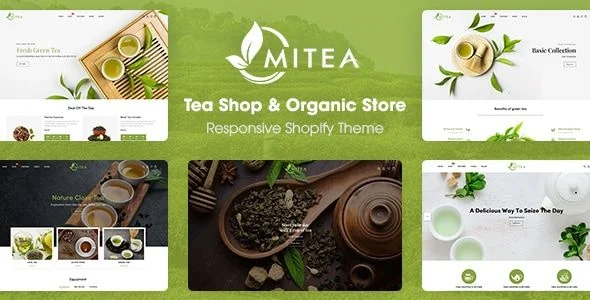
Mitea Overview & Shopify 2.0 Storefront Foundation
Mitea is a responsive Shopify theme engineered on the Online Store 2.0 architecture for tea merchants, organic grocers, and produce retailers who need a production storefront without hand-assembling Liquid templates from scratch. The package addresses a concrete delivery bottleneck: independent sellers typically spend weeks wiring cart drawers, layered navigation, currency switching, and megamenu structures into a default Shopify install before a single product can be merchandised properly. Within agency and freelance workflows, it functions as a drop-in revenue layer, where five homepage presets, six header configurations, and one-click demo import compress a typical storefront build into a single deployment cycle.
Technical Specifications & Deployment Matrix
| Engineering Metric | Deployment Specification |
|---|---|
| Base Technology / Framework | Shopify Online Store 2.0 (Liquid templating), Bootstrap 4.x front-end grid |
| Runtime / Language Requirements | Shopify-hosted runtime; validated on Firefox, Safari, Opera, Chrome, and Edge |
| Data Exchange / Communication Protocols | Ajax add-to-cart, Ajax wishlist, drawer cart updates, multi-currency switching, order product notifications |
| Front-End / Engine Dependencies | HTML5, CSS3, Sass/SCSS, Less, JS files, FontAwesome icon set, built-in slider engine |
| Database / Persistence Footprint | No local persistence layer; all catalog and order data resides on Shopify’s managed infrastructure |
Liquid Section Rendering & Commerce Execution Pipeline
Mitea renders catalog and product pages through Shopify’s Online Store 2.0 section-based template system. Each homepage variant is composed of reorderable Liquid sections — image slider regions in the header area, best-seller carousels, collection grids, and blog post sliders — that the merchant repositions through the theme editor rather than by editing template files. When a shopper interacts with the storefront, add-to-cart actions dispatch Ajax requests that update the drawer cart in the header without a full page reload, keeping the session state synchronized while the customer continues browsing. The advanced layered navigation filters collection data on parameters such as price and attributes, and the automatic price change logic recalculates displayed totals whenever variant or currency selections shift. Because the entire pipeline executes on Shopify’s hosted infrastructure, there is no server-side code for the merchant to provision or patch. For retailers outside the tea and organic vertical evaluating comparable OS 2.0 storefronts for hardware catalogs, Vitic occupies the same architectural slot for tools and equipment inventories.
Architectural & Functional Highlights
- Flexible Mega Menu & Advanced Layered Navigation: Unlimited megamenu layouts are defined through theme settings rather than hard-coded markup, while layered navigation applies faceted filtering to collections to shorten the path from landing to product page.
- Ajax Cart Drawer & Wishlist Synchronization: Cart and wishlist operations execute as background requests, so product grids remain interactive while the drawer header reflects updated quantities, totals, and currency values in real time.
- Merchandising Labels & Multi-Currency Handling: Native “New”, “Hot”, and “Sale” labels attach to product tiles at the template level, and auto-currency logic adapts pricing display for cross-border shoppers without duplicate storefronts.
- Conversion & Retention Modules: Newsletter capture, Instagram image sliders, blog post carousels, Facebook Chat, order product notifications, “Buy Together” bundling, and 360-degree or video product media ship as configurable sections within the same install.
Production Implementation & Operational Resilience
Deployment begins with the one-click import routine, which provisions demo pages, menus, and section presets onto a live Shopify store; the vendor demo itself sits behind the password “1” for pre-purchase inspection. From there, secondary development stays inside documented boundaries: the included Sass, SCSS, and Less source files expose the styling layer for token-level overrides, unlimited Google Fonts integration handles typography swaps, and header/footer style options plus site identity controls adjust global chrome without touching template logic. Grid and list view toggles, a built-in toolbar, paging, and a back-to-top button are pre-wired into the collection templates, so pagination behavior needs no custom JavaScript.
Resilience is inherited largely from the platform rather than the theme codebase. Cross-browser rendering is validated against Firefox, Safari, Opera, Chrome, and Edge, and the high-resolution, retina-ready asset pipeline prevents image degradation on dense displays. Product data supports external/affiliate listings, customer reviews, and an “Additional Information” tab for attribute tables, which extends coverage to suppliers who fulfill outside Shopify’s native inventory. Because full Oberlo compatibility is documented, dropshipping imports flow into the product carousel and collection structures without adapter code. Agencies running parallel vertical builds — florists and gifting catalogs, for instance — often evaluate Florie as a sibling Shopify deliverable, while Jubilee covers the same OS 2.0 slot for jewelry and luxury fashion clients.
Frequently Asked Questions
Can demo content be imported into a live store with a single action?
Yes. The theme ships with one-click import functionality that provisions the demo pages, menus, and section presets directly onto a Shopify storefront, replacing the manual reconstruction of the five homepage layouts.
Does Mitea support Oberlo-based dropshipping workflows?
Yes. The documentation confirms full Oberlo compatibility, meaning product data imported through Oberlo feeds directly into the existing collection grids, carousels, and layered navigation structures without requiring adapter plugins or template modifications.