Ludos Paradise | Video Gaming Blog Clan Esports WordPress Theme
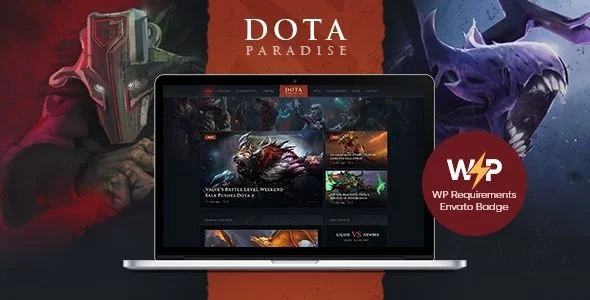
Ludos Paradise Overview & Gaming Content Architecture
Ludos Paradise is a WordPress theme engineered for gaming studios, esports clans, and content publishers who need to operate blogs, forums, stores, and team pages inside one deployment. The package resolves the fragmentation problem that typically forces gaming communities to maintain separate installations for news, live stream schedules, clan rosters, and equipment commerce. In agency delivery workflows, it functions as a pre-wired foundation where demo data, custom post types, and plugin dependencies install through a one-click routine, letting developers move from staging to production in hours rather than weeks.
Technical Specifications & Deployment Matrix
| Engineering Metric | Deployment Specification |
|---|---|
| Base Technology / Framework | WordPress theme built on HTML5 and CSS3, PHP/CSS/JS source files included |
| Runtime / Environment Requirements | WordPress 4.9.x through 7.0.x; PHP 7.3, 7.4, and 8.0 verified in release history |
| Platform Interoperability | WPBakery Page Builder, WooCommerce 5.x–8.x, bbPress 2.5.x–2.6.x, BuddyPress 9.x–10.x, WPML |
| Front-End Dependencies | Slider Revolution, Swiper Slider, Essential Grid, Contact Form 7, M Chart, ThemeREX Addons |
| Data / Persistence Footprint | Standard WordPress MySQL schema extended with custom post types, widget sets, and importable demo datasets |
| Rendering Environment | Fixed layout, 4+ columns, retina image support, IE11/Firefox/Safari/Opera/Chrome/Edge coverage |
Clan Management, Publishing & Commerce Execution Pipeline
The execution pipeline routes every inbound request through WordPress template hierarchy overrides before WPBakery renders composed page structures.
Because the theme registers its own custom post types and shortcodes through the bundled ThemeREX Addons module, gaming-specific entities such as clan members, tournaments, matches, results, and event calendar entries live as first-class content objects rather than flattened page markup. The setting inheritance and override system propagates global configuration downward, so a child category or individual page can deviate from parent defaults without duplicating option trees. Interactive Ajax search queries these post types directly, returning matched gaming content without full page reloads. A 750+ option Customizer layer exposes colors, typography, header and footer layouts, and blog feed composition, while the GDPR Framework plugin and MailChimp for WP handle consent capture and subscriber synchronization.
Architectural & Functional Highlights
- Clan & roster management: Custom post types store member profiles, team structures, and player statistics as queryable records, enabling archive templates to render roster grids without hand-built markup.
- Forum and community layer: bbPress and BuddyPress compatibility adds threaded discussion boards and member profiles, turning a static blog into an operational fan community hub.
- Commerce channel: WooCommerce bindings power a gaming equipment store, with product grids, carts, and checkout rendered through theme-compatible templates across versions 5.x through 8.x.
- Broadcast infrastructure: Live stream sections and M Chart integration support Twitch-style content embedding and statistical chart rendering for match analytics and review posts.
- Layout engine: WPBakery Page Builder (formerly Visual Composer) lets non-developers modify header, footer, and body regions through drag-and-drop modules, while 20+ post animations and multiple blog styles control feed presentation.
For studios extending the content model beyond shipped post types, Advanced Custom Fields Pro supplies field groups, validation rules, and JSON synchronization when custom review scores or player metadata need structured storage outside the default meta tables.
Production Implementation & Operational Resilience
Deployment begins with the one-click demo importer, which writes full datasets — sliders, grids, pages, and theme options — into a fresh WordPress database. Version 2.1.4 hardened this pathway by disabling object unserialization from demo-data and theme option payloads, closing a common object-injection vector during staging imports. On the front end, the codebase merges theme scripts into a single file (fixed in 2.1.5), which reduces request fragmentation and benefits Largest Contentful Paint on content-heavy gaming portals. Responsive and mobile-friendly rendering covers boxed and fullwidth page layouts, while RTL stylesheets (added in 2.0.3) support right-to-left locales without a separate theme fork.
Customization should proceed through child themes and the Customizer option panel rather than direct file edits, since the ThemeREX Updater plugin delivers incremental releases that overwrite modified core files. The inheritance and override architecture is the sanctioned extension surface: global settings cascade downward, and per-page overrides intercept only the values that must diverge. Maintenance cadence matters here — each release since 2.0.5 has patched theme styles, plugin versions, and demo data, so agencies running long-lived client portals should schedule update windows. Regarding media: live preview imagery is copyrighted to its owners and ships separately, meaning production sites must source their own screenshots, artwork, and clipart before launch. To enrich product pages within the WooCommerce channel, YITH WooCommerce Featured Audio Video Content attaches featured audio and video media to equipment listings through configurable rules, a practical path for showcasing peripherals with gameplay footage.
Frequently Asked Questions
Can a full demo site be imported without manual content reconstruction?
Yes, the one-click demo install routine writes complete demo datasets — pages, sliders, Essential Grid configurations, and theme options — directly into the WordPress database, replacing days of manual setup with a single activation step.
Are the images shown in the live preview included in the downloadable package?
No, all preview imagery is copyrighted to its respective owners and is deliberately excluded from the template files, so developers must supply licensed artwork, screenshots, and photography before deploying a client site.
Does the package support right-to-left language deployments?
Yes, RTL stylesheets were introduced in version 2.0.3, allowing Arabic, Hebrew, and other right-to-left locales to render mirrored layouts without maintaining a separate fork of the codebase.
-
2.0.9 LatestOct 31, 2026
-
2.0.8September 26, 2026