Lottery Numbers – HTML5 Game
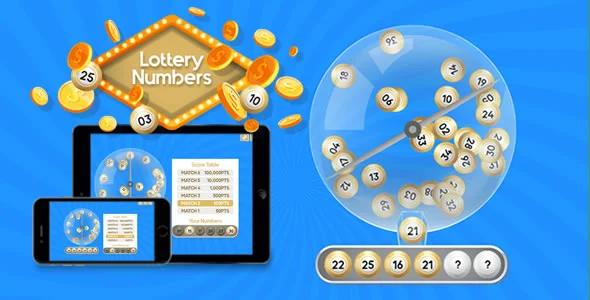
Lottery Numbers Overview & Canvas-Rendered Draw Engine Architecture
Lottery Numbers is an HTML5 number-draw game built on CreateJS, engineered for web studios and interactive agencies to deploy a browser-based lottery simulation across desktop and mobile audiences. The package removes the need for server-side game logic, because the full round cycle — ticket selection, drum animation, ball reveal, and prize resolution — executes client-side within a single canvas-driven runtime. In agency delivery it operates as a self-contained static asset that drops onto any hosting target and reskins through included layered PSD sources, fitting campaign microsites, portal game libraries, and WebView-wrapped mobile builds.
Technical Specifications & Deployment Matrix
| Engineering Metric | Deployment Specification |
|---|---|
| Base Technology / Framework | HTML5 game constructed with the CreateJS library suite |
| Runtime / Language Requirements | Client-side JavaScript executing in IE9, IE10, IE11, Edge, Firefox, Safari, Opera, and Chrome |
| Deliverable Package | ZIP containing JavaScript JS, HTML, CSS, PHP files, and a layered Photoshop PSD |
| Display Pipeline | 1280×768 canvas resolution with auto-resize scaling and devicePixelRatio correction |
| Input Layer | Dual mouse and touch controls for desktop and mobile operation |
| Persistence Footprint | Self-contained round state; leaderboard or membership/rewards functionality attaches via a single compatible add-on |
Draw Pipeline & Configuration Surface
The core mechanism is a six-ticket selection followed by a randomized drum draw with configurable reveal counts. Once a player locks in six numbers and presses start, the drum sequence runs through three timed phases — a start timer, a spin interval governed by a spin-speed parameter, and an end timer — before balls surface one by one toward the reveal table. Each drawn ball is checked against the player’s ticket, and the prize resolver compares the total match count against the prize matrix to award win points.
Every stage of that pipeline is parameterized. Game settings define total balls, total reveal balls, and whether a bonus ball participates in the round; prize settings define the match thresholds and their point values; drum settings choreograph timing. Text displays and image assets are replaceable for full branding passes, and a table mode supports configurations beyond 36 balls with an optional zero-based numbering start.
Architectural & Functional Highlights
- Result Determinism Controls: A preset result option pins specific outcomes per round, while percentage-based result control adjusts the probability weight of each outcome — useful for QA verification and calibrated reward curves.
- Drum Choreography Parameters: Start timer, spin speed, and end timer values shape the draw animation, and balls can rotate at a 3D angle for depth presentation on the canvas stage.
- Reskinning Pipeline: The included layered PSD plus full text and image asset replacement lets studios rebrand the entire surface without touching game logic.
- Social Distribution Layer: Share score actions push results to Facebook, Twitter, WhatsApp, Telegram, Reddit, and LinkedIn through the rebuilt 2026 template’s social module.
- Fallback and Orientation Guards: A browser-not-supported page intercepts legacy runtimes, and a rotate instruction screen guides landscape-only sessions on mobile.
For teams assembling a broader casual catalog rather than shipping a single draw title, DUO PACK GAMES 1 bundles Construct3 and HTML builds as an independent acquisition path for engagement-focused game libraries.
Production Implementation & Operational Resilience
Deployment requires no build toolchain: extract the ZIP, host the directory, and point a browser at the entry HTML. The runtime scales the 1280×768 stage to fit the whole device screen; note the documented boundary that scaling may not achieve pixel-perfect fullscreen on every viewport geometry. Version 2.7 rebuilt the template and improved scaling behavior through devicePixelRatio awareness, which sharpens canvas output on high-density displays.
Audio handling reflects a known browser constraint: Chrome’s autoplay policy previously blocked sound until interaction, and the v1.4 fix addressed audio not playing in that environment. The v2.5 sound function update continued that hardening. Basic runtime controls — enter fullscreen, mute sound, and exit game — are exposed as first-class options rather than hidden internals.
Extension operates through a strict single-slot model. The engine accepts exactly one add-on at a time: either the leaderboard system, which collects submitted scores and renders a Top 10 ranking, or the membership and rewards module, which adds sign-up, login, saved game data, and point redemption. Attempting to stack both is outside the supported configuration surface. For engagement objectives that shift from luck-based draws toward physics-driven mechanics, Impulse Ball functions as a standalone Construct3 title occupying a parallel position in a multi-game rollout plan.
Frequently Asked Questions
Does the package include layered design sources for a complete visual rebrand?
Yes. The ZIP ships with HTML5 source files alongside a layered Photoshop PSD, so every visible asset can be re-exported and replaced through the documented text and image customization options without modifying game logic.
Can the leaderboard add-on and the membership/rewards add-on run together in one deployment?
No. The engine is documented as compatible with only one add-on at a time, so teams must choose between Top 10 score rankings or the account, saved-data, and point-redemption module when planning a build.
Is there a setting to start ball numbering from zero instead of one?
Yes. Introduced in version 1.5, an option sets the ball number sequence to begin from zero, and the reveal table additionally supports configurations exceeding 36 balls for wider draw pools.
Does the auto-resize scaling guarantee exact fullscreen coverage on every device?
No. The 1280×768 stage scales to fit the whole screen device, yet the documentation states it may not be perfectly fullscreen, a boundary compounded by the landscape-only orientation instruction shown to mobile users in portrait.