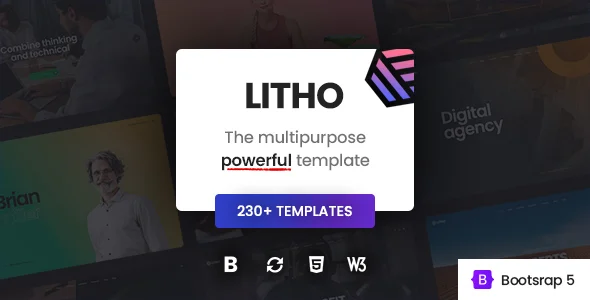
Litho – The Multipurpose HTML5 Template
Litho HTML5 Template: Front-End Architecture & DOM Optimization
Litho – The Multipurpose HTML5 Template is a responsive front-end framework built with Bootstrap 5, semantic HTML5, and modular CSS, engineered specifically for enterprise software platforms, creative design agencies, and digital storefronts. Its component-driven markup structure reduces nested DOM nodes to preserve memory allocation during large-scale client-side rendering. Asynchronous JavaScript execution pipelines defer non-critical asset loading, allowing visual modules and dynamic interface elements to render without main-thread blocking or visual stutter.
Developers assemble layouts by composing decoupled SCSS stylesheets and atomic HTML components across distinct viewports without relying on bulky global script dependencies. Centralized configuration objects defined within modular build manifests allow front-end engineers to set global typography scales, grid breakpoint variables, third-party plugin initializations, and theme color palettes without altering the core vendor source code.
Production Engine Capabilities in the Litho HTML5 Template
- Modular SCSS Pipeline: Source styles compile via organized variable sheets and mixins, yielding minified, vendor-prefixed CSS assets that eliminate redundant selector definitions and unused utility classes.
- Responsive Grid Fluidity: Layout structures utilize Bootstrap 5 flexbox primitives and native CSS Grid routines to guarantee sub-pixel alignment across screens ranging from 320px mobile viewports to 4K desktop displays.
- Lightweight Dynamic UI Components: Interactive elements including off-canvas menus, modal dialogs, and isotope portfolio filters operate through event-delegated, vanilla JavaScript wrappers to minimize listener memory footprints.
- Semantic SEO Microdata Support: Core structural templates feature clean schema-ready HTML5 tags, structured heading hierarchies, and WAI-ARIA accessibility attributes to streamline continuous bot parsing and assistive technology traversal.
Real-World Deployment Scenarios
- Corporate SaaS Documentation Hubs: Technical teams deploy the multipage documentation layouts to serve high-density code examples, interactive feature tables, and API parameter listings with near-instant client navigation.
- Performance-Focused Creative Portfolios: Media production studios leverage the template’s filtered media grids and lazy-loaded image containers to showcase high-resolution assets without triggering Cumulative Layout Shift (CLS).
- Direct-to-Consumer Product Landings: Marketing engineers implement the integrated conversion-driven checkout and hero templates to maintain sub-second First Contentful Paint (FCP) metrics across mobile cellular networks.
Technical Specifications & Compatibility Standards
The codebase adheres to the W3C markup validation specification and integrates seamlessly into automated CI/CD static site generation pipelines, Webpack asset managers, and Gulp build runners. Dynamic front-end assets require no server-side execution runtime, functioning predictably across Apache, Nginx, LiteSpeed, and modern edge-hosted static buckets (such as Cloudflare Pages or AWS S3). The structural framework supports modern ECMAScript specifications without requiring polyfills for ES6+ array methods and CSS custom properties.
Browser runtime tests confirm cross-platform compatibility across modern desktop and mobile engines including Blink (Chrome, Edge), Gecko (Firefox), and WebKit (Safari). The uncompressed distribution package maintains an isolated structural hierarchy where modular CSS, decoupled vendor scripts, and lightweight SVG vector assets remain fully separated from production-ready HTML source files.
Frequently Asked Questions
What CSS framework serves as the structural foundation for this codebase?
The codebase relies directly on Bootstrap 5 flexbox grid utilities and modern SCSS architecture, completely omitting legacy dependencies like jQuery in its modern script execution lifecycle.
Does the template introduce render-blocking scripts during critical page load?
No render-blocking behaviors occur when scripts are loaded via defer attributes; internal script paths position vendor libraries and DOM manipulation logic asynchronously at the end of the markup.
How does the template structure handle web font loading and layout shifts?
Typography assets utilize preconnect resource hints and CSS font-display swap attributes, preventing invisible text periods during web font fetching and maintaining strict Core Web Vitals compliance.