Kids Doodle Coloring Games For Kids + Ready For Publish
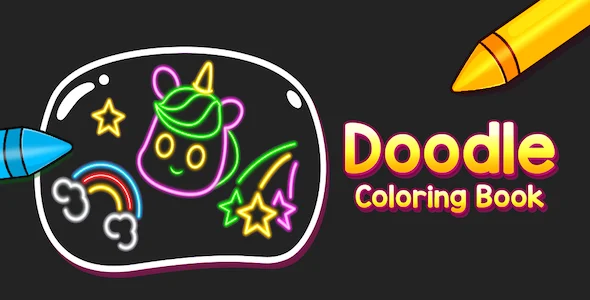
Kids Doodle Coloring Games Overview & Android Casual Game Architecture
Kids Doodle Coloring Games is a native Android casual game source code package, engineered for mobile publishers and indie studios to ship a production-ready doodle coloring application with minimal pre-release engineering. The package addresses a concrete deployment bottleneck in the kids and toddler entertainment segment: producing an Android title that passes current Play Store 64-bit and Android 15 target API requirements while carrying a working AdMob monetization layer, without rebuilding a coloring engine from scratch. Within an agency or solo publisher workflow, it functions as a publishable baseline: the first buyer can compile and submit the project as-is, and subsequent releases can swap artwork and category packs to expand catalog reach across multiple store listings.
Technical Specifications & Deployment Matrix
| Engineering Metric | Deployment Specification |
|---|---|
| Base Technology / Framework | Native Android project (Java), compiled in Android Studio |
| Runtime / OS Compatibility | Android 9.0 through Android 15.0 |
| Source Assets Included | .java source files, .xml layouts and resources, Layered PNG artwork, compiled .apk |
| Monetization Layer | AdMob Interstitial and Banner placements on the current AdMob SDK |
| Build Architecture | 64-bit build support targeting the latest Android API level |
| Content Expansion Model | Developer-supplied image packs added to the coloring library |
Doodle Coloring Engine & Monetization Execution Pipeline
The core mechanism is a touch-driven canvas coloring loop that maps finger input events to bounded fill regions on pre-loaded doodle artwork. Each selectable image is instantiated as a coloring session where tap coordinates are resolved against the artwork’s region boundaries, a selected pigment is applied to the bounded area, and the session state is retained until the player exports or exits the scene. Rendering is handled through the native Android view stack defined in the included XML layouts, with layered PNG assets supplying the outline and region data that the Java activity code consumes when dispatching fill operations. Because the engine reads its library from packaged image assets, extending the catalog is an asset-injection task rather than a logic-rewrite task: new pictures are dropped into the drawable resource set and registered in the selection screen’s data source. Audio feedback loops run alongside the rendering path, and a native share intent exposes the finished artwork to the Android system share sheet so results propagate to messaging and social applications installed on the device. Monetization requests flow through the bundled AdMob SDK integration, with banner inventory occupying persistent screen regions and interstitial units triggered at session transition points defined in the activity lifecycle. Developers building a broader family publishing portfolio around this engine often pair it with complementary kids titles — for example, deploying Clementine: Ultimate Adventure alongside it gives a Unity-based cross-platform counterpart with its own in-app purchase and AdMob stack for studios targeting both store ecosystems.
Core Technical Capabilities of Kids Doodle Coloring Games
- Native Android 15 Build Compliance: The project targets the current API level with 64-bit binary support, satisfying Play Console target-API and ABI requirements for modern submission pipelines, with backward compatibility reaching Android 9.0 devices.
- Integrated AdMob Monetization Layer: Banner and interstitial ad units are wired into the current AdMob SDK, so publisher revenue flows activate once ad unit identifiers are replaced during the standard pre-publish configuration pass.
- Asset-Driven Content Expansion: New coloring pictures are added by injecting additional layered PNG assets into the project rather than modifying engine logic, which keeps reskin and catalog-expansion cycles confined to the resource directory.
- HD Rendering and Audio Pipeline: High-definition artwork assets and bundled sound effects ship with the project, delivering a finished sensory profile without additional media sourcing for a first release.
- System-Level Share Dispatch: Completed doodles route through Android’s native share intent, exporting player creations to any installed handler on the device with no custom transport code required.
Production Implementation & Operational Resilience
Deployment begins in Android Studio, which is the sole stated build requirement: the publisher imports the project, verifies the Gradle and SDK toolchain resolution, and replaces the AdMob unit identifiers before generating a signed release bundle. The package ships with a compiled APK that functions as a verification build — testing the demo binary on target hardware before purchase confirms runtime behavior across the device matrix the listing claims, spanning Android 9 through 15. Version 1.2, dated 31-01-2026, added Android 15+ support, migrated to the latest AdMob SDK, and shipped bug fixes, which signals an actively maintained codebase aligned with Google’s incremental API target mandates. Reskin boundaries are well defined: color palettes, artwork libraries, UI strings, and audio assets are replaceable through the resource layer, while structural changes — new game modes or in-app purchase flows — fall outside the shipped feature set and require custom development, a service the original author offers on request along with full store upload handling. For publishers assembling a multi-title kids learning portfolio, this asset slots in as the creative-expression entry point; studios extending into early-education verticals frequently round out the catalog with math games & quiz Learn Add, Subtract, Multiply & Divide to cover the numeracy segment from the same WordPress-driven distribution hub. Operational caution points are limited but real: ad revenue depends on correct AdMob account configuration, and any catalog expansion should preserve the layered asset structure so region-fill logic continues resolving tap boundaries correctly.
Frequently Asked Questions
Does Kids Doodle Coloring Games run on Android 15 devices?
Yes, version 1.2 explicitly added Android 15+ support alongside the latest AdMob SDK, and the compatibility matrix covers Android 9.0 through 15.0 with 64-bit builds targeting the current API level.
Is Android Studio required to build the project?
Yes, Android Studio is the stated build environment for this source package, since the project ships as native Java and XML source files that must be compiled, configured with AdMob identifiers, and signed for store submission.
Can new coloring pictures be added without modifying engine code?
Yes, the design separates the coloring engine from its image library, so additional pictures are added by placing new layered PNG assets into the resource set and registering them for the selection screen.
Does the package include in-app purchase functionality out of the box?
No, monetization is limited to AdMob banner and interstitial placements; in-app purchase integration would require custom secondary development, which the author offers as a separate contracted service.
Do buyers need to reskin the game before first publication?
No, the first buyer can publish the project without reskinning, although replacing artwork and ad identifiers remains standard practice before submitting a signed release bundle to the Play Console.