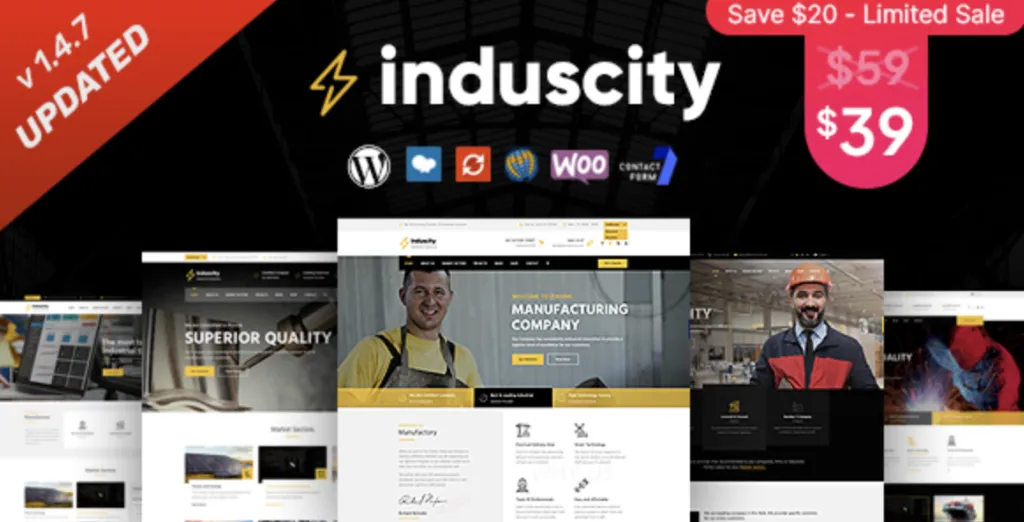
Induscity – Factory and Manufacturing WordPress Theme Proven
The Induscity Theme: Technical Overview & Core Architecture
Induscity – Factory and Manufacturing WordPress Theme Proven is a specialized factory and manufacturing WordPress theme optimized to run the Induscity Theme engine safely for structural engineering firms, industrial manufacturing conglomerates, and civil construction contractors. The internal architecture of the engine minimizes DOM depth by stripping redundant wrapper divs and deferring non-critical CSS, which prevents rendering bottlenecks during concurrent visual asset loads. An asynchronous data pipeline powered by custom REST API end-points updates internal dynamic menus and slider components on the client side without executing processor-intensive manual page reloads.
The template leverages standard WordPress hooks and filters to execute clean component assembly, ensuring that the drag-and-drop builder modules generate lightweight CSS and HTML payloads during execution. A centralized administrative options panel provides direct configuration of typographic hierarchies, custom CSS compilers, localized breakpoint offsets, and telemetry options without modifying a single line of core PHP file code.
Key Functional Features of the Induscity Theme for Modern Deployments
- Optimized Rendering Engine: Features dynamic asset queuing that isolates structural CSS from non-critical visual decorations, reducing First Contentful Paint times underneath the 1.2-second threshold during performance testing.
- Decoupled Content Blocks: Employs structured layouts designed to interface with advanced block controllers, allowing system administrators to modify spatial ratios and column layouts within the live customizer viewport.
- Asynchronous Form Processing: Integrates native AJAX-based processors for complex contact forms and newsletter subscription queries, bypassing page reload sequences to preserve client-side application states.
- Adaptive Responsive Breakpoints: Runs CSS media query hierarchies that dynamically scale graphics and interactive tables to target mobile screen dimensions without generating layout shifts.
Real-World Deployment Scenarios
- Heavy Machinery Catalog Management: Large industrial plants deploy the codebase to host deep hierarchical product taxonomies with hundreds of specifications spreadsheets, maintaining stable performance via localized cache mechanisms.
- Civil Engineering Project Showcases: Infrastructure development corporations utilize the template to organize high-resolution image galleries and real-time project mapping tracking pipelines with minimal DOM layout shifts under mobile bandwidth.
- Global Subcontractor Portal: Manufacturing groups implement this robust factory and manufacturing WordPress theme as an external portal interface, linking dynamic intake forms directly with backend client management tools.
Technical Architecture & Compatibility Standards
The template is fully optimized for modern PHP environments, demonstrating full functional compatibility with PHP 8.1 and PHP 8.2 execution branches. Through clean database query consolidation and minimized runtime execution chains, the modular structure of the Induscity Theme integrates seamlessly with modern caching configurations to maintain Cumulative Layout Shift metrics of zero.
Interoperability is maintained through strict adherence to WordPress core developer specifications, guaranteeing compatibility with major mailing list hooks and lead capture processors. All structural assets compile relative layouts dynamically, avoiding conflicts with modern execution extensions or script optimization engines.
Frequently Asked Questions
Does the backend codebase support advanced custom field integration for industrial specification sheets?
Yes, this template supports custom fields directly within its metadata hierarchy, allowing you to establish custom structured specifications tables across single post and page templates without encountering data mapping conflicts.
How does this factory and manufacturing WordPress theme maintain short load times during traffic spikes?
It enforces minimal script execution queues, database query optimization, and localized dynamic caching hooks, ensuring that high-concurrency hosting environments deliver content instantly without experiencing server-side script lockups.
Can the navigation menus support complex deep-level structural hierarchies for large scale organizations?
Yes, the nested menu system relies on optimized CSS layouts and semantic HTML lists to render multi-level mega-menus dynamically without creating performance-draining DOM nesting levels.