Graingrower – Agriculture Farming WordPress Theme
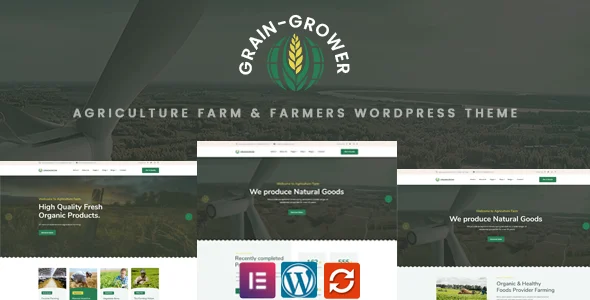
Graingrower Overview & Responsive Agriculture Site Foundation
Graingrower is an Elementor-driven agriculture farming WordPress theme, engineered for agencies and farm operators who need to publish production-grade websites for dairies, organic food retail, livestock, poultry, landscaping, and precision farming operations. The package addresses the bottleneck of hand-coding sector-specific layouts by shipping prebuilt templates, a one-click demo importer, and a theme options panel that together reduce a full deployment to a content-replacement workflow. In practice, it functions as the presentation layer of a self-hosted WordPress stack, handling DOM rendering, typography, and form intake while leaving hosting, database persistence, and plugin governance to the underlying CMS.
Technical Specifications & Deployment Matrix
| Engineering Metric | Deployment Specification |
|---|---|
| Base Technology / Framework | WordPress theme built on the Layers WP framework with Bootstrap 5.x front-end scaffolding |
| Runtime / Language Requirements | WordPress 5.5.x through 7.1.x; PHP 7.x+ hosting environment with MySQL persistence |
| Data Exchange / Communication Protocols | Contact Form 7 form handling, Mailchimp list integration, WPML-compatible translation loading |
| Front-End / Engine Dependencies | Elementor drag-and-drop page builder (front-end and back-end editing modes) |
| Deliverable / Persistence Footprint | PHP, HTML, CSS, and JS files with layered CSS architecture and parallax-capable JS modules |
Elementor Rendering Pipeline & Functional Capabilities
Every page rendered by this architecture passes through the Elementor page builder engine rather than raw template file editing. Inbound requests are resolved against the WordPress template hierarchy, after which Elementor widgets assemble section markup on both the front end and the administrative back end, meaning structural edits never require direct PHP modification. Demo content is injected through a one-click installer that provisions preconfigured pages, menus, and media, leaving only brand assets, business names, and phone numbers to be replaced before launch.
Because the layout engine stores widget trees as structured content rather than hard-coded markup, layout state survives builder reloads and can be re-sequenced through drag-and-drop operations. The Bootstrap 5.x grid underlies the responsive breakpoints, and the CSS layer exposes an unlimited color scheme alongside Google Fonts selection from the theme options panel, so visual tokens are changed centrally rather than per-template.
Architectural & Functional Highlights
- One-Click Demo Importer: Provisions a complete, preconfigured site structure in minutes, converting deployment into a find-and-replace content workflow instead of layout construction from zero.
- Elementor Drag-and-Drop Builder: Front-end and back-end editing modes let editors restructure section markup visually, bypassing manual PHP template hierarchy overrides for routine changes.
- Child Theme Architecture: A child-theme-ready structure isolates customization code from the parent package, preserving modifications across version upgrades applied through the Envato Toolkit update channel.
- WPML & Translation Readiness: String loading is compatible with multilingual layouts, letting operators localize dairy, poultry, or organic retail content into any target language.
- SEO-Oriented Markup: W3C-validated HTML and organized code output support on-page optimization passes, and the lightweight asset footprint keeps initial paint cost low for Core Web Vitals evaluation.
For operators evaluating parallel packages in the same vertical before committing to a codebase, Agrox occupies the same agriculture and organic farming slot as an alternate Elementor-era deployment option worth comparing during discovery.
Production Implementation & Operational Resilience
Deployment follows the standard WordPress theme lifecycle: upload the package through the admin dashboard or SFTP, activate it, then run the one-click demo importer before replacing placeholder content. Cross-browser behavior is verified across Firefox, Safari, Opera, Chrome, and Edge, and the responsive layout adapts to mobile, desktop, and retina pixel densities, which matters because the majority of agriculture-sector traffic arrives on handheld devices in the field. A sticky header option, introduced in the v1.0.3 update for mobile viewports, keeps navigation accessible during long-scroll content traversal.
Form intake routes through Contact Form 7, so field validation, spam mitigation, and mail transport are governed by that plugin’s configuration rather than theme-level logic. Custom CSS is supported natively, giving developers a sanctioned override channel that should be preferred over editing parent stylesheet files directly. When structural changes are required, the child theme mechanism is the correct extension boundary; all modifications belong in the child layer so parent-package updates—such as the mobile header fix and installer refinements shipped through v1.0.4—can be applied without overwriting client-specific code.
The theme is not Gutenberg-optimized and does not ship widget-ready regions, so block-based editorial workflows and classic sidebar widget placement fall outside its supported operating envelope. Page assembly is expected to remain within the Elementor pipeline. In the broader organic food and grocery segment, Organek serves as a comparable standalone WordPress theme for teams scoping multiple candidates against different layout systems.
Frequently Asked Questions
Can Graingrower be edited with the Gutenberg block editor instead of Elementor?
No. The package is explicitly documented as not Gutenberg-optimized; page construction and layout modification are designed around the Elementor drag-and-drop builder for both front-end and back-end editing workflows.
Does the theme provide widget-ready sidebars for classic widget placement?
No. Widget-ready regions are not part of the deliverable. Layout composition is handled through Elementor widget structures and the theme options panel instead of classic WordPress sidebar and widget registration.
Will custom code changes survive theme version updates?
Yes. The architecture is child-theme ready, so overrides placed in a child layer remain intact when parent updates arrive, and the Envato Toolkit channel delivers those updates alongside lifetime access to new releases.
-
1.0.4 LatestNov 6, 2026
-
1.0.3Oct 25, 2026