Dictum – Lawyer WordPress Theme
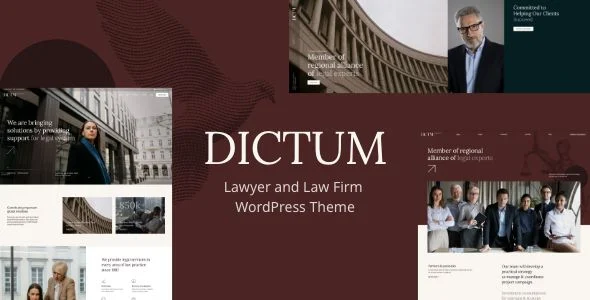
Dictum: Technical Overview & Architecture
Dictum – Lawyer WordPress Theme is an Elementor-based WordPress theme engineered for solo attorneys, boutique law firms, and corporate legal departments that need a structured, content-heavy web presence. The template ships with a flattened DOM hierarchy in which practice area grids, attorney profile cards, and case result listings are rendered through reusable Section components rather than nested wrapper divs, keeping markup depth under four levels on archive pages. Front-end state changes, such as practice area filtering, contact form submission, and testimonial carousel rotation, execute through AJAX endpoints that return JSON payloads, so the browser updates only the affected widget container instead of triggering a full document reload.
Component assembly runs entirely inside the Elementor page builder, where each legal-industry block, including counsel team grids, statute-style accordions, and verdict highlight rows, is exposed as a drag-and-drop widget with live preview. The centralized theme options panel, built on the Redux-style configuration layer, controls color palette tokens across all 12 pre-styled skins, Google Font pairings with per-heading-level font weight assignment, container widths and sidebar placement for archive templates, and sticky header behavior with scroll-trigger offset values. Every parameter persists in a single serialized options row, which reduces the number of database queries dispatched on each page load.
Key Functional Features of the Dictum Theme
- Practice Area Architecture: A dedicated custom post type with hierarchical taxonomy support lets you register parent categories such as Litigation and nested specializations like Commercial Disputes, each rendered through a detail template with schema-compatible heading order and breadcrumb navigation.
- Attorney Profile System: Individual counsel pages pull structured meta fields, including bar admissions, education history, and representative matters, into a tabbed layout that loads each section on demand to keep initial payload weight low.
- Case Results Post Type: A verdict and settlement module stores outcome data, court jurisdiction, and practice area tags, then surfaces entries through filterable archive grids that query the database with indexed taxonomy lookups.
- Elementor Widget Library: More than 20 legal-specific widgets, from counsel carousels to statute quote blocks, register their own Elementor categories, so every layout change occurs visually in the editor without template file edits.
- Responsive & Retina Rendering: Media queries break at five viewport steps down to 320px, and all iconography is delivered as inline SVG with srcset-backed imagery, ensuring sharp rendering on high-density displays.
- Search Engine Structure: Heading hierarchies, semantic HTML5 article wrappers, and Open Graph integration are baked into every template file, giving the legal WordPress theme a crawlable structure that aligns with attorney niche search intent.
Production Deployment & Use-Case Scenarios
- Solo Attorney Brand Site: A single-practice lawyer deploys the one-page homepage variant, consolidates three practice areas into anchored sections, and routes all inquiries to a conditional contact form, producing a complete personal brand site within a single afternoon of configuration.
- Boutique Firm Multi-Practice Portal: A five-partner litigation boutique uses the attorney directory grid with profile deep links, publishes case results through the dedicated post type, and assigns each partner a practice area taxonomy filter so prospective clients land on relevant counsel pages directly from search.
- Corporate Legal Department Hub: An in-house legal team scales the theme across dozens of publication entries and news updates, using the archive pagination and categorized search to keep a large document library navigable while maintaining a single cohesive header and navigation system.
Technical Architecture & Compatibility Standards
The theme runs on PHP 8.0 through 8.3 and requires WordPress 6.0 or higher, with Elementor installed as its rendering engine. Stylesheets are enqueued conditionally per widget, unused CSS blocks are stripped from pages where their components do not appear, and image assets ship with lazy-loading attributes, which keeps Largest Contentful Paint within the Core Web Vitals “good” threshold on standard shared hosting configurations.
Interoperability covers the plugins a law firm site realistically depends on: Contact Form 7 and WPForms for consultation intake, Yoast SEO and Rank Math for metadata control, WooCommerce for legal publication sales, and WPML for multilingual counsel directories. The template loads its scripts in the footer with dependency-aware registration, avoiding conflicts when multiple form and SEO extensions are active simultaneously.
Frequently Asked Questions
Does Dictum include pre-designed homepage layouts for law firms?
Yes, the package contains multiple industry-specific homepage demos, including variants for solo attorneys, boutique firms, and corporate legal departments, all importable as complete Elementor templates.
Can I build practice area and attorney profile pages without writing code?
Yes, practice areas and counsel profiles are managed through custom post types with meta field boxes, and their front-end layouts are assembled visually in the Elementor editor with no PHP or CSS editing required.
Does the theme ship with a case results module for displaying verdicts and settlements?
Yes, a dedicated Case Study post type stores outcome details, court jurisdiction, and practice area tags, then publishes them through filterable archive grids on any page.
Can I customize fonts and colors globally instead of editing each page?
Yes, the centralized options panel controls color tokens, Google Font pairings, container widths, and header behavior from one screen, and the changes propagate across every template.
Does Dictum require a paid page builder subscription to function?
No, the theme runs on the free version of Elementor, and all bundled legal widgets, demo layouts, and post type modules work without upgrading to the pro tier of the builder.
-
25 February 2025 LatestSeptember 17, 2026