Demus – Furniture WooCommerce Theme
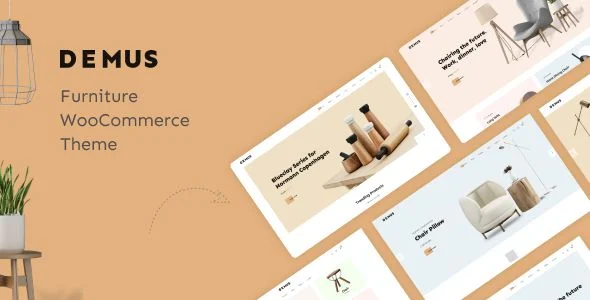
Demus Furniture WooCommerce Theme Overview & Storefront Deployment Role
Demus Furniture WooCommerce Theme is an Elementor-driven WordPress eCommerce theme built for agencies and store owners launching furniture, interior design, architecture, or electronics storefronts on WooCommerce. The package removes the primary bottleneck of storefront assembly by shipping 10+ prebuilt homepage demos, multiple shop-archive styles, and several product-single layouts that install through a one-click demo import routine. Within agency delivery pipelines it operates as a deployment-ready design layer: Elementor governs drag-and-drop page composition, the WordPress Customizer controls global configuration, and bundled slider and form tooling reduces third-party sourcing.
Technical Specifications & Deployment Matrix
| Engineering Metric | Deployment Specification |
|---|---|
| Base Technology / Framework | WordPress theme package built on the Elementor page builder engine with native WooCommerce integration |
| Runtime / Language Requirements | WordPress 5.6.x through 6.8.x; WooCommerce 5.x.x through 9.x.x |
| Front-End / Engine Dependencies | Elementor page builder; Revolution Slider; Contact Form 7; premade widget set |
| Browser Compatibility | Chrome, Firefox, Safari, Opera, Edge |
| Deliverables / Persistence Footprint | PHP, CSS, and JS source files; widget-ready sidebars; Customizer theme mods stored in the WordPress options layer |
Elementor Rendering Pipeline & Storefront Execution Architecture
Demus routes every storefront view through the WordPress template hierarchy and the Elementor rendering engine. When an inbound request resolves to a page, WordPress selects the appropriate template file from the theme’s PHP structure, and Elementor interprets the stored page data to assemble the final DOM output. Product archives and single-product views defer to WooCommerce’s template system, with the theme supplying multiple shop styles and product-detail layouts that can be swapped without manual template editing. The one-click demo import writes complete content structures — homepage demos, inner pages, blog layouts, and widget assignments — directly into the database, so a full storefront skeleton exists immediately after import rather than after manual assembly.
Layout composition follows a mobile-first design approach with a 4+ column grid system, and vector icons supply high-resolution rendering on retina displays without raster asset duplication. Because the design layer is not Gutenberg-optimized, Elementor remains the designated editing surface; block-editor workflows are not the primary path for composing Demus pages.
Core Technical Capabilities of Demus
- Elementor Drag-and-Drop Composition: Pages are structured visually through Elementor’s builder interface, letting developers reorder sections, edit product grids, and adjust typography without editing template files directly.
- One-Click Demo Import: The import routine materializes 10+ homepage demos, internal pages, blog layouts, and premade widgets into WordPress content tables, collapsing multi-day setup work into a single operation.
- Header & Footer Builder: Site chrome is composed through a dedicated builder function, replacing static header and footer PHP regions with editable, position-controlled layouts.
- Unlimited Sidebar Generator: Developers can register an unrestricted number of custom sidebars and assign them per template region, while Customizer controls govern main and secondary color schemes, site width (boxed or full-width), and layout settings.
- Bundled Plugin Stack: Revolution Slider and Contact Form 7 ship with the package alongside premade widgets, reducing dependency procurement during project setup.
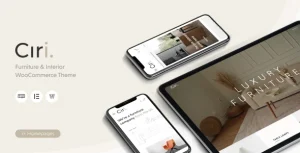
For teams evaluating standalone furniture storefront options in parallel, Ciri – Furniture & Interior WooCommerce Theme occupies a comparable position in the same WooCommerce ecosystem and can serve as a design reference point during scoping.
Production Implementation & Operational Resilience
Demus is verified across a wide runtime matrix: WordPress 5.6.x through 6.8.x and WooCommerce 5.x.x through 9.x.x, which covers both legacy client environments and current installs. Cross-browser behavior is documented for Chrome, Firefox, Safari, Opera, and Edge, and the responsive layout adapts across smartphone and tablet viewports with a touch-friendly interface. The theme is documented as optimized for speed, search engine visibility, and mobile rendering, with a high-resolution layout that avoids pixelation on dense displays.
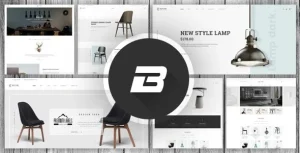
Configuration at scale happens through the WordPress Customizer rather than code edits: main options, side-area options, social links, post list options, portfolio options, styling options, layout settings, footer section options, and header section options are each exposed as discrete panels, and advanced toggles allow individual features to be enabled or disabled per project. Parallax backgrounds, menu styling, header backgrounds, boxed content backgrounds, and client-logo regions are all configurable from this surface. Because PHP, CSS, and JS files ship in the package, developers retain source-level access for targeted overrides beyond the Customizer boundary. Agencies shortlisting alternative furniture retail foundations can also assess Benco – Responsive Furniture WooCommerce WordPress Theme as an independent theme package during the evaluation phase. The documented helpdesk ticket channel and online documentation define the official escalation path for defect triage and configuration questions.
Frequently Asked Questions
Can Demus be built and edited using the Gutenberg block editor instead of Elementor?
No. The technical attributes explicitly mark the theme as not Gutenberg-optimized, and all page composition, header, footer, and demo layouts are designed around the Elementor drag-and-drop builder as the designated editing workflow.
Are Revolution Slider and Contact Form 7 bundled inside the Demus package?
Yes. Both plugins ship with the theme, with Revolution Slider updates provided, so developers do not need to source or purchase slider or contact-form tooling separately when assembling a Demus-based furniture storefront.
Does Demus include premade layouts beyond the homepage demos?
Yes. In addition to the 10+ homepage designs, the package ships premade inner pages, blog page layouts, multiple online shop styles, several product-single detail layouts, and a premade widget set for content construction.