
 My Account
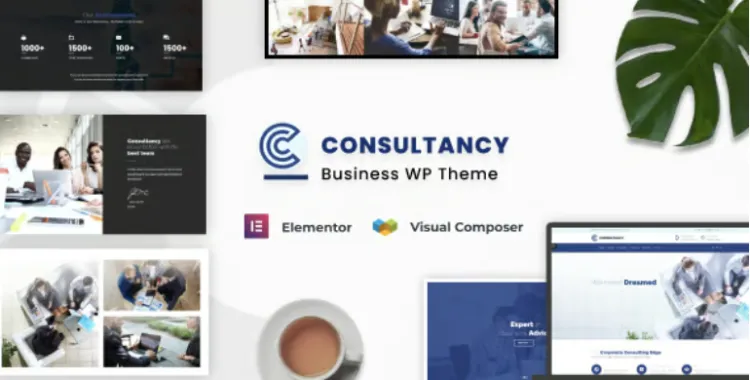
The Business WordPress Theme Pro: Technical Overview & Core Architecture
Consultancy Business WordPress Theme Pro operates as an object-oriented codebase engineered for corporate financial advisors, management consultancies, and enterprise risk analysts. The underlying architecture enforces strict DOM depth minimization and conditional asset queuing, stripping unused CSS and JavaScript execution cycles during high-density data interactions. An asynchronous data pipeline processes dynamic user interface modifications via native REST API endpoints, updating asynchronous components without full-page reloads or main-thread bottlenecks.
Component assembly directly leverages WordPress template hierarchy through modular template parts and prioritized action hooks, functioning as a scalable corporate consulting theme codebase across diverse site topologies. The centralized administrative options console exposes controls for global CSS custom properties, typography scale ratios, flexbox header layouts, and multi-tier semantic footer structures without requiring source code modifications.
Key Functional Features of the Business WordPress Theme Pro for Modern Deployments
- Asynchronous Dynamic Filtering: Executes instant taxonomy queries and archive sorting via non-blocking fetch requests, binding incoming JSON payloads directly to existing DOM nodes without document re-parsing.
- Modular Block Architecture: Interfaces with native block editors and standard layout builders, ensuring the Business WordPress Theme Pro renders clean semantic markup devoid of nested wrapper bloat.
- Automated Schema Metadata Insertion: Injects structured JSON-LD payloads covering Organization, Service, and FAQPage schemas into document headers during runtime render cycles.
- Granular Header and Navigation Control: Provides administrative layout switches between sticky, transparent, and off-canvas navigation trees with explicit ARIA accessibility attribute bindings.
Real-World Deployment Scenarios
- Boutique Advisory Site Modernization: Management advisory groups deploy the theme to transition legacy multipage architectures into sub-second, accessibility-compliant web portals that catalog white papers and staff credentials.
- Global Corporate Restructuring: Enterprise strategy firms implement the framework to standardize branch microsites using centralized styling definitions, cutting redundant CSS overhead across localized nodes.
- Commercial Accounting Agency Integration: Accounting networks leverage the codebase as a primary corporate consulting theme to deliver rapid-loading fiscal calculative indexes and lead-intake interfaces under heavy concurrent loads.
Technical Architecture & Compatibility Standards
The theme execution layer is strictly aligned with PHP 8.0 through PHP 8.3 runtimes, utilizing strict typing, standardized class autoloading, and core WordPress coding standards. Runtime environments require MySQL 8.0 or MariaDB 10.5, operating inside a minimum memory allocation of 128MB to facilitate continuous dynamic rendering under concurrent traffic spikes.
Performance profiles reliably achieve Largest Contentful Paint under 1.2 seconds and Cumulative Layout Shift metrics under 0.05 on standard testing configurations, fulfilling core corporate consulting theme performance parameters. Full script isolation ensures clean interoperability with enterprise caching mechanisms, translation utilities, and object-caching Redis layers.
Frequently Asked Questions About the Business WordPress Theme Pro
Q: Which PHP runtimes are supported by this theme?
A: The codebase natively supports PHP 7.4 through PHP 8.3, fully adhering to modern server standards, type safety specifications, and WordPress core lifecycle maintenance policies.
Q: How does the architecture achieve low layout shift scores?
A: Layout stability is maintained by reserving explicit width and height aspect-ratio boxes for imagery, alongside preloaded system-fallback font stacks that prevent mid-render reflow occurrences.
Q: Does theme configuration require low-level template file editing?
A: Configuration requires no template file editing, as all structural, typographic, and palette adjustments are managed via native customizer controls and centralized administrative properties.




There are no reviews yet.