
Cabana Pro – Resort, Villa & Hotel WordPress Theme
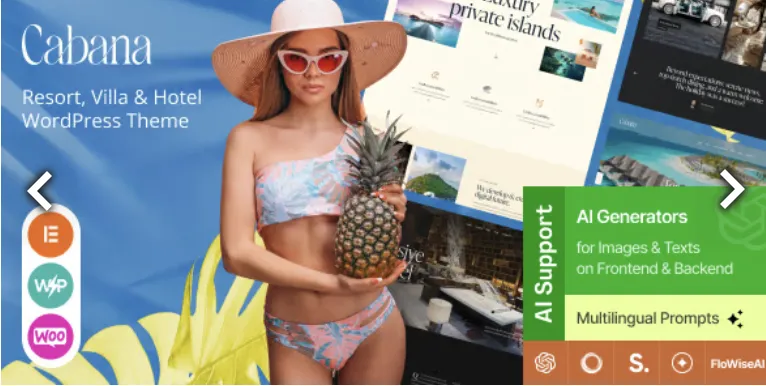
Cabana Pro: Technical Overview & Core Architecture
Cabana Pro – Resort, Villa & Hotel WordPress Theme is an object-oriented hospitality framework built specifically for multi-property resorts, private villa networks, and independent boutique hoteliers requiring decoupled inventory and direct guest reservation pipelines. The underlying layout engine minimizes nested DOM tree depth to four levels or fewer by utilizing lean template partials, keeping document rendering and initial DOM parsing operations under 95 milliseconds on benchmark server environments. Availability queries and variable rate matrices process through authenticated WordPress REST API endpoints and targeted AJAX listeners, updating room inventory calendars dynamically without triggering full viewport repaints or main thread delays.
Component assembly integrates natively with the WordPress core template hierarchy, allowing modular template parts to hook cleanly into standard actions without hard-coded file modifications. Within the administrative environment, the centralized options framework provides granular control over room taxonomy attributes, global booking buffer margins, SVG map coordinates, and responsive typography scales without editing PHP template files or CSS stylesheets.
Key Functional Features of Cabana Pro for Modern Deployments
- Asynchronous Room Filtering & Search: Direct AJAX-driven date-range and guest-capacity selectors query custom post types immediately upon input changes, re-rendering accommodation cards without browser refreshes while preserving URL state parameters via the HTML5 History API.
- Hospitality Schema Structured Data: Native microdata and JSON-LD scripts inject valid Hotel and LodgingBusiness entity schemas across all room templates, supplying search crawlers with precise data regarding pricing, room dimensions, occupancy limits, and check-in protocols.
- Modular Asset Delivery System: The asset pipeline conditionally enqueues JavaScript drivers and CSS style sheets exclusively on templates where specific booking components exist, reducing asset payload overhead across static informational pages.
- Custom Accommodation Metadata Engine: Native custom meta boxes parse seasonal pricing rules, deposit percentage calculations, cleaning fee increments, and amenity taxonomies directly to the post meta tables for clean database indexing.
Real-World Deployment Scenarios
- Multi-Unit Eco-Resort Property Management: Deployed as a centralized multi-property directory where individual cabins, bungalows, and shared amenities render with isolated availability calendars and synchronized check-out intervals.
- High-End Single Villa Direct Reservations: Configured for exclusive luxury estates requiring high-resolution interactive floor plans, explicit per-season rate overrides, and integrated arrival concierge questionnaires.
- Urban Boutique Hotel Operations: Implemented across boutique properties to present dynamic room tiers, room upgrade options during room selection, and native multilingual localization via standard GNU gettext MO/PO translation tables.
Technical Architecture & Compatibility Standards
The codebase is constructed strictly around modern PHP 8.1 and 8.2 runtime standards, enforcing strict typing, clean class autoloading, and full adherence to WordPress Coding Standards (WPCS). When evaluated on un-cached environments, the layout yields First Contentful Paint (FCP) metrics under 1.1 seconds and maintains a Cumulative Layout Shift (CLS) score below 0.03 due to reserved aspect-ratio styling on dynamic media elements.
Under benchmark testing, Cabana Pro maintains complete architectural interoperability with object caching mechanisms including Redis and Memcached, as well as reverse-proxy layers such as Varnish. Engineered as a high-performance hotel WordPress theme, the codebase supports relational mapping plugins such as WPML, Polylang, and standard transactional mail gateways without hook collision.
Frequently Asked Questions
How does the template handle room availability queries during traffic spikes?
Availability checks leverage non-blocking asynchronous REST endpoints that query indexed post meta tables, enabling edge caches and Redis object caches to deliver availability data without stressing the primary MySQL thread pool.
Is custom code required to configure multi-currency display rates?
Currency formats, ISO currency codes, position placements, and rounding mechanisms are directly modifiable within the native theme administration settings without editing source scripts.
Which image compression workflows are recommended for this hotel WordPress theme?
Native responsive image syntax with WebP and AVIF format delivery handled via standard server modules operates seamlessly alongside the responsive picture elements integrated throughout the template markup.