Bitexco – Creative Interior Elementor Template Kit
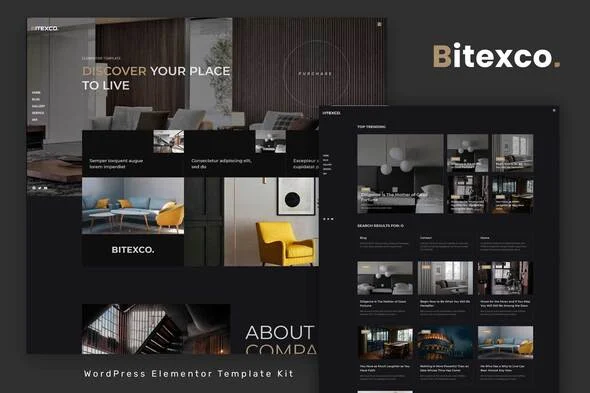
Bitexco Overview & Layout Delivery Architecture
Bitexco is an Elementor Template Kit engineered for interior designers, architects, furniture brands, and real estate studios to launch portfolio-driven websites without hand-building page layouts in the editor. The package removes the bottleneck of constructing page structures from a blank canvas by shipping prebuilt JSON layout documents that import directly into the Elementor page builder and remain fully editable after import. Within agency delivery pipelines, it functions as a staging accelerator: designers clone a consistent dark, modern visual system across client sites while developers bind the dynamic sections to live post data.
Technical Specifications & Deployment Matrix
| Engineering Metric | Deployment Specification |
|---|---|
| Base Technology / Framework | Envato Template Kit built for the Elementor page builder |
| Runtime / Version Requirements | Elementor 3.4.x, 3.5.x, 3.6.x, 3.8.x, and 3.10.x |
| Premium Dependency | Elementor Pro (required for post and theme builder features; sold separately, not included) |
| Data Exchange / Import Channel | Template Kit zip uploaded through the Envato Elements plugin (Elements > Installed Kits) |
| Typography Stack | Poppins and Roboto wired into global font controls |
| Imagery Footprint | CC0 stock photography sourced from Unsplash for demo placeholders |
| Persistence Footprint | No custom database structures; all layouts live as standard Elementor documents |
JSON Layout Engine & Template Execution Pipeline
The kit operates as a JSON layout library that the Elementor editor parses into native container structures on import. Once a template payload passes through the Envato Elements upload channel, the page builder materializes each section as draggable widget instances governed by global design tokens rather than per-page hardcoded styles. Typography is anchored to Poppins and Roboto at the site level, so a font swap in the global controls panel propagates across every imported page without per-template rework. Layout balance follows the dark, grid-aligned visual language the demo presents, tuned for architecture portfolios, furniture catalogs, and property showcases.
Dynamic sections follow a strict binding discipline. Blog, category, author, and search templates depend on Elementor Pro’s theme builder and post widgets, which must be pointed at the correct post query after import. The Elementor Navigator panel exposes every post element inside a template, and each widget’s query source, whether a category archive or a single post, is configured there.
Architectural & Functional Highlights
- Nine-Archetype Template Library: The kit ships Home, 404, Contact, Service, Gallery, Blog Single, Categories, Author, and Search templates, giving a complete site map where every page imports as an independently editable Elementor document.
- Global Design Token System: Colors and typefaces route through Elementor’s global controls, letting a single token adjustment restyle all imported pages and keeping visual consistency enforced at the site level instead of per-widget.
- Dynamic Post Query Binding: Post widgets are located via the Navigator and mapped to explicit queries; paired image and content widgets sharing one column must reference the same query so rendered media always matches its accompanying text block.
- Theme Builder Dependency Isolation: All dynamic functionality (single posts, archives, author listings, search results) delegates to Elementor Pro rather than custom code, keeping the kit within standard page-builder execution paths.
Studios needing a second visual direction inside the same Elementor import workflow can treat Retirio – Architecture & Interior Elementor Template Kit as an alternate kit for architecture and interior portfolios, since both assets run through the identical Envato Elements upload pipeline and query-binding model.
Production Implementation & Operational Resilience
Deployment follows a defined sequence: install and activate the Envato Elements plugin from Plugins > Add New, then upload the kit zip unzipped through Elements > Installed Kits. Before importing any template, the Install Requirements button must be clicked so the required plugins activate; skipping this step leaves dynamic widgets without their runtime dependencies. Imports should be executed one template at a time, since sequential uploads reduce memory pressure and make it easier to isolate a failed payload. Hosts should confirm an adequate PHP memory allocation (wp_memory_limit) before batch-importing the full nine-template set, as container-heavy layouts with high-resolution Unsplash imagery consume meaningful memory during the render pass.
Customization boundaries are confined to style overrides and asset replacement. Because this is a layout package rather than a coded extension, secondary development means swapping imagery, adjusting global tokens, and rebinding post queries, not writing new backend logic. The most common failure mode is a query mismatch: when an image widget and its content widget in a shared column point to different queries, the front end renders mixed data pairs; correcting both to the same query in the Navigator resolves it. For decoupled implementations outside the template-kit runtime, Helen – Architecture & Interior WordPress Theme exists as an independent theme-level alternative covering the same architecture and interior design vertical without the Elementor import pipeline.
Frequently Asked Questions
Does the kit bundle Elementor Pro inside the package?
No, Elementor Pro is a separate purchase and is not included. The kit requires the Pro upgrade specifically for post and theme builder features, while static templates such as Home, Contact, and Gallery import through the standard Elementor editor.
Must paired image and content widgets in one column share identical query settings?
Yes. Elements that share a single column are deliberately paired by image and content, and both must be set to the same post query. Aligning them prevents mismatched render output where imagery and text from different posts appear side by side.
Can the demo images from the kit be used on live production sites?
Yes. The demo imagery is drawn from Unsplash under the CC0 designation, meaning the placeholder photos can be retained on launched client sites or replaced with project photography without attribution obligations.