Artfurniture – Furniture Theme for WooCommerce WordPress
Artfurniture Overview & Furniture Storefront Rendering Engine
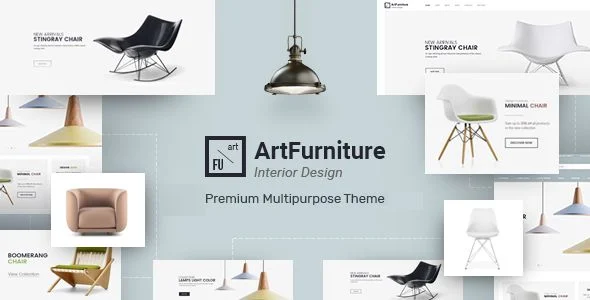
Artfurniture is a WooCommerce WordPress theme engineered for furniture and home-decor retailers to operate a full product catalog storefront with configurable layouts, layered product filtering, and importable demo content. The package addresses a specific delivery bottleneck: furniture merchants need shoppers to narrow large inventories by price, manufacturer, size, color, and material while presenting sofas, beds, chairs, and lighting across multiple merchandising layouts. In agency and production workflows, it functions as a deployable storefront foundation built on Bootstrap 4.x, the Redux options framework, and WPBakery drag-and-drop composition, with sample content that shortens the path from installation to a populated store.
Technical Specifications & Deployment Matrix
| Engineering Metric | Deployment Specification |
|---|---|
| Base Technology / Framework | WordPress 4.9.x through 6.7.x on Bootstrap 4.x |
| Commerce Runtime | WooCommerce 5.x through 9.x |
| Page Builder Engine | WPBakery Page Builder (Visual Composer) with Templatera |
| Localization / Data Exchange | WPML supported; widget-ready sidebars; Redux framework options store |
| Deliverable Footprint | PSD source files, documentation, sample content, 4 pre-defined homepage layouts |
Storefront Rendering Architecture & Merchandising Pipeline
The core mechanism is WordPress template hierarchy overrides layered over WooCommerce product data. Homepage assembly begins under a Mega Menu with a Revolution Slider block, after which category modules render thumbnail-driven navigation and product grids whose row counts, visible categories, and per-screen product totals are configured through the theme options panel rather than hardcoded templates. WPBakery shortcodes execute the layout composition, and header and footer regions are themselves built through the same drag-and-drop editor, so merchandising teams restructure page regions without editing PHP template files.
On the shop layer, the theme registers filtering widgets that query WooCommerce product attributes — size, color, material, manufacturer, and price brackets — returning constrained product collections in either grid or list view. The product detail page exposes image zoom and lightbox inspection, plus a Related Products slider populated from shared taxonomy. When a shopper hovers a product thumbnail in the catalog, the interface swaps to a rotator image and surfaces a call-to-action button through a CSS transition, reducing clicks needed to reach the cart.
Core Technical Capabilities of Artfurniture
- Ajax commerce layer: Shopping cart updates, quick-view modals, wishlist entries, and product comparison operate through Ajax requests, avoiding full page reloads during browse-and-add sequences.
- Redux-driven configuration store: Unlimited Google font and color options, color presets, box and full-width layout switching, and unlimited custom sidebars with left/right positioning persist through the Redux framework options panel.
- Multi-layout content system: Four pre-defined homepages, three blog layouts, and post formats for audio, video, gallery, and image give content teams distinct presentation templates without duplicate development.
- Carousel and grid engines: Product carousels, latest-post sliders, and Essential Grid layouts power category merchandising blocks interleaved with CMS content such as free-shipping notices.
- Bundled plugin stack: Mega Main Menu, Revolution Slider, Essential Grid, Templatera, Contact Form 7, Mailchimp for WordPress, and MailPoet ship as required or optional components in the installation flow.
For store owners who need structured customer feedback loops beyond the default review fields, deploying Reviews System Plugin alongside the WooCommerce runtime adds an independent feedback module that operates within the same WordPress request cycle.
Production Implementation & Operational Resilience
Version 1.1.0, released 03/29/2025, carries PHP 8 compatibility fixes and synchronization with the latest WordPress and WooCommerce releases — a meaningful deployment prerequisite, since hosting stacks running PHP 8 require this version or later to avoid runtime deprecations. The theme’s update history from 1.0.1 through 1.0.9 shows an incremental compatibility cadence tracking WooCommerce 3.5 through 7.x, including targeted fixes to image zoom, testimonial modules, and the Roadtheme-helper plugin. Because the package ships with the Roadtheme demo import pipeline, staging environments can replicate the reference storefront before content is replaced; the included PSD files provide design reference points for agencies preparing custom brand adaptations.
Failure states are handled through a dedicated 404 error page template and widget-ready fallback regions for empty sidebars. WPML support governs multilingual data exchange, letting translation overlays ride on top of the same template layer. It is worth stressing that the theme is not Gutenberg-optimized per its documentation — all content composition runs through WPBakery — so teams standardizing on the block editor should account for that boundary. Merchants comparing parallel furniture-sector options can evaluate Scandi as an alternative WooCommerce theme in the same category, while for decoupled implementations outside the PHP theme runtime entirely, Rumma exists as an independent Elementor Template Kit path for furniture and interior presentations.
Frequently Asked Questions
Does the download package include layered design source files for rebranding work?
Yes, ThemeForest files for this theme include PSD documents, giving design teams editable source layers for preparing custom brand adaptations alongside the importable sample content and written documentation.
Can the theme run on modern PHP 8 hosting environments?
Yes, version 1.1.0 released on 03/29/2025 explicitly fixes PHP 8 compatibility while updating against the latest WordPress and WooCommerce cores, making that build the required baseline for current-generation server stacks.
Is the theme optimized for the WordPress Gutenberg block editor?
No, the documentation lists Gutenberg Optimized as a negative attribute; page composition, headers, and footers are constructed through WPBakery Page Builder shortcodes and Templatera templates instead of native blocks.
-
1.1.0 LatestOct 30, 2026