AMZ – All in One Creative WordPress Theme

AMZ All in One Creative WordPress Theme Overview & Multi-Purpose Rendering Architecture
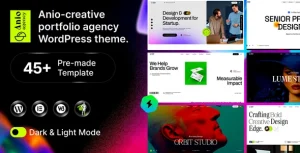
AMZ All in One Creative WordPress Theme is a multi-purpose WordPress theme built on the Unyson framework, engineered for agencies and studio teams that need to ship corporate, portfolio, shop, and magazine sites from a single codebase. The package resolves the operational bottleneck of maintaining a separate theme per vertical by unifying a Redux-driven options panel, an Elementor-based header and footer builder, and WooCommerce storefront templates under one architecture. In production workflows, it operates as the presentation layer for client deliverables, with one-click demo import shortening the path from a fresh install to a populated staging site.
Technical Specifications & Deployment Matrix
| Engineering Metric | Deployment Specification |
|---|---|
| Base Framework | Unyson framework with a companion AioKit plugin extending Elementor |
| Runtime / Language Requirements | WordPress 6.0.x through 7.0.x; PHP, CSS, and JS source files |
| Compatible Ecosystem | Elementor, Elementor Pro, Contact Form 7, WPML, WooCommerce 6.x–8.x |
| Browser Targets | IE11, Chrome, Edge, Firefox, Safari, Opera |
| Deliverable Formats | Layered PNG, layered PSD, PHP, CSS, and JS files; widget-ready sidebars |
Elementor Header Builder & Template Execution Pipeline
The core execution flow routes every inbound request through the standard WordPress template hierarchy, where AMZ templates take over header, footer, and page regions and delegate their markup to Elementor’s rendering engine. Header structures are assembled through a drag-and-drop builder that outputs unlimited header and footer instances, each switchable between sticky (fixed on scroll) and static positioning. Configuration travels on two levels: global values live in a Redux-based options panel exceeding 100 settings, while per-page overrides are stored in metaboxes so a single landing page can deviate from site-wide defaults without touching code.
Core Technical Capabilities of AMZ
- Unlimited Header/Footer Instances: Because headers and footers render as Elementor documents, each template carries its own widget tree, menu assignments, and scroll behavior, letting a shop page run a fixed navigation bar while an editorial page stays static.
- Portfolio Custom Post Type: A dedicated CPT registers project entries with defined thumbnail dimensions (600×400px) and layout variants, giving agencies and construction firms a structured data model for case-study publishing.
- WooCommerce Storefront Layer: Shop, cart, and checkout templates ship with product galleries that support zoom, lightbox, and slider interactions, mapped to WooCommerce 6.x through 8.x template contracts.
- One-Click Demo Import: The Unyson-based importer provisions posts, widgets, and theme options in a single operation, which is most safely executed on a clean staging database before content replacement.
- Widget & Sidebar Grid: Separate widget areas for the main sidebar, shop sidebar, and footer accept recent-post listings, product filters, and contact blocks, keeping dynamic content out of hard-coded templates.
For business deployments that need scheduled client interactions beyond the theme’s native scope, activating BookPro at the plugin layer adds calendar-driven appointment workflows without forcing template rewrites, since AMZ leaves scheduling logic to the plugin tier as WordPress architecture intends.
Production Implementation & Operational Resilience
Deployment in agency client environments should follow a staged sequence: install on a staging host matching the WordPress 6.0.x–7.0.x range, run the demo importer, then replace demo payloads with production content before pushing live. Demo imports move a large payload of posts, media, and option arrays in one request cycle, so executing the import during off-peak hours on a staging stack reduces the chance of partial imports under concurrent load. Multilingual delivery is covered by WPML compatibility plus translation-ready string packaging with RTL support, which allows right-to-left locales to render mirrored layouts from the same stylesheet set. Extensibility follows WordPress convention: the codebase exposes hooks and filters, so developers can attach custom output to existing template events or fork presentation logic through a child theme rather than editing packaged files directly. Styling boundaries are equally conventional—custom logos and backgrounds register through the WordPress Customizer, while color and typography tokens are governed from the Redux panel. For studios weighing a leaner builder-centric base outside the Unyson stack, Page Builder Framework Premium Addon exists as an independent, performance-oriented theme path and should be evaluated as a parallel option rather than merged into this codebase. Cross-vertical lookups also exist in the same repository—finance-sector builds, for instance, are better served by a vertical-specific theme than by stretching a multi-purpose package beyond its demo set.
Frequently Asked Questions
Is AMZ optimized for the Gutenberg block editor?
No. The documented feature set targets Elementor and Elementor Pro as the page-building engines, and Gutenberg optimization is not listed among the theme’s attributes or capabilities.
Does the download package include editable design source files?
Yes. Layered PSD and layered PNG files ship alongside the PHP, CSS, and JS source, allowing designers to inspect the original layout compositions and adapt visual assets before production handoff.
Can the theme render right-to-left language layouts?
Yes. The package is translation-ready with RTL compatibility documented in its feature list, so locales such as Arabic or Hebrew receive mirrored layouts without requiring a separate RTL child theme.
-
v1.0 LatestOct 22, 2026