
 My Account
Product Overview
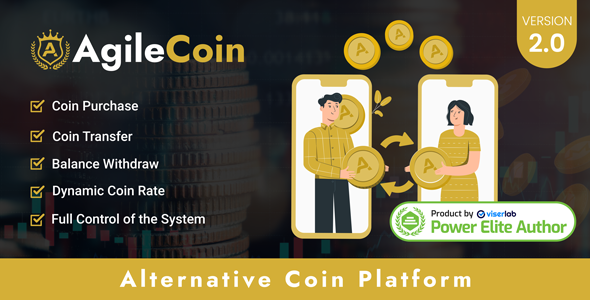
AgileCoin provides a robust Alternative Coin Platform, enabling developers and entrepreneurs to deploy a custom digital currency project. This comprehensive PHP script, known as AgileCoin – Alternative Coin Platform, functions as a complete ecosystem for managing your own token, from creation to user transactions. It’s designed for anyone looking to establish a secure, controlled environment for their own digital asset, catering to communities, businesses, or specialized crowdfunding initiatives.
After installation, the admin dashboard presents a clear overview: a main panel displays system statistics like total users, active tokens, and recent transactions. Navigating the left sidebar, you’ll find sections for user management, token configuration, and transaction logs. Initial setup involves defining your token’s name, symbol, decimal places, and initial supply within the ‘Token Settings’ menu. The UI for these inputs is straightforward, with clear field labels.
Highlights & Value
- The user dashboard features a responsive layout, dynamically adjusting for mobile and desktop screens. Users see their current token balance prominently displayed, along with a sortable table for all deposit, withdrawal, and transfer activities. Filters for date ranges and transaction types are readily available.
- Administrators gain granular control via the ‘Manage Tokens’ section. Here, you can adjust token parameters like supply, enable/disable trading, or pause transactions for maintenance. The ‘User Management’ panel allows viewing individual user wallets, their transaction history, and includes options to manually adjust balances or change account statuses.
- An integrated deposit and withdrawal system handles user funds. When a user initiates a deposit, the request appears in the admin panel for manual approval or rejection. Similarly, withdrawal requests are queued and require admin processing, ensuring oversight. The referral system tracking is accessible in the admin area, showing who referred whom and any associated rewards earned.
Real-World Use Cases
- Implementing a community reward system where members earn custom tokens for participation, which can then be exchanged within the platform.
- Creating an in-game currency for a web-based game, allowing players to earn, trade, and spend tokens for virtual items or services.
- Developing a loyalty program for an e-commerce store, issuing tokens to customers for purchases and enabling them to redeem these for discounts or exclusive products.
- Launching a private crowdfunding platform where investors purchase specific project tokens, which can then be managed and tracked through the system.
Technical & Compatibility
Setting up AgileCoin requires a standard LAMP or WAMP stack with PHP 8.x and MySQL 5.7+ for optimal performance. The installation process typically involves uploading files to your web server, creating a database, and running the setup script through your browser. Configuration files are well-structured, allowing for straightforward database connection details and environment settings.
The robust back-end architecture of this Alternative Coin Platform efficiently handles user wallets, transaction ledgers, and token supply data. On the front end, the user interface is built responsively, ensuring a consistent experience across desktop browsers, tablets, and smartphones. Custom branding, such as logo uploads and primary color scheme adjustments, can be managed directly through the admin settings panel, instantly reflecting changes across the user-facing pages without requiring code edits.
FAQ & Tips
When deploying AgileCoin – Alternative Coin Platform, configuring the cron jobs correctly is crucial for automating tasks like interest distribution or scheduled token events. Double-check your server’s cron settings against the documentation to ensure these background processes run as intended. For email notifications (e.g., transaction alerts), verify your SMTP settings within the admin panel; test emails can confirm deliverability before going live.
For ongoing maintenance, regular database backups are highly recommended. While the platform includes built-in security considerations, adhering to standard web security practices like strong admin passwords and keeping your server’s PHP version updated will further enhance the system’s resilience. Updates, when released, typically involve replacing core files and potentially running database migrations, which are usually outlined in the update instructions.





There are no reviews yet.