ABC Kids Learning Preschool with AdMob Facebook Ads Android
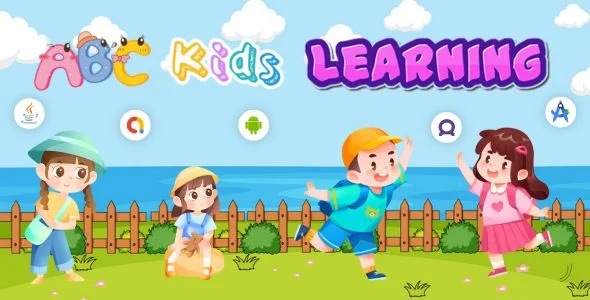
ABC Kids Learning Preschool Overview & Native Android Educational Architecture
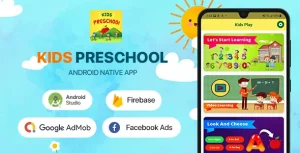
ABC Kids Learning Preschool is a native Android application source package built in Java with XML layouts, engineered for mobile studios and independent publishers deploying phonics and alphabet education products for toddlers, preschoolers, and kindergartners. The package removes the cost of authoring an early-education curriculum engine from scratch by shipping prebuilt learning modules — alphabet tracing, number recognition, animal, bird, and fruit vocabulary, weekday and month sequencing, plus memory and spelling match games — inside a single compilable codebase. In production workflows it functions as a ready-to-brand app shell that studios reskin, wire to their own ad unit identifiers, and ship to Google Play.
Technical Specifications & Deployment Matrix
| Engineering Metric | Deployment Specification |
|---|---|
| Base Technology / Framework | Native Android application developed in Java |
| UI Layout System | Declarative XML view hierarchy with bundled drawable and audio assets |
| Supported Runtime Range | Android 9.0, 10.0, 11.0, 12.0, and 15.0 device targets |
| Source Deliverables | .apk, .java, and .xml files included in the package |
| Monetization Layer | AdMob and Facebook ad network integrations |
| Content Persistence | Locally bundled HD flashcards, images, and phonics audio; no external content fetch required for lessons |
Learning Engine & Content Execution Pipeline
The engine operates a module-based activity architecture where each learning category launches as a discrete Android activity with its own XML layout and media assets. When a child selects a category from the main launcher screen, the corresponding activity inflates its view hierarchy, loads HD flashcard drawables from the packaged resources, and begins phonics playback for the selected letter or word. Tracing screens capture touch coordinates on the letter canvas and map finger strokes against the uppercase and lowercase glyph paths from A to Z, reinforcing shape recognition through repetition.
Match-based modules apply a different dispatch pattern. The memory game presents a shuffled card grid that enforces alphabetical sequencing, requiring the player to pair letters in order before advancing. The find-and-match variants for birds, animals, and fruits validate each selection against the expected image reference, while the spelling module compares the assembled letter sequence against the target word before confirming a correct answer. Because every lesson runs on assets compiled into the APK, gameplay continues without any network round-trip; connectivity is consumed only by the ad layer, which requests fill from AdMob and Facebook SDKs at configured placement points between activities.
Architectural & Functional Highlights
- Multi-Category Curriculum Modules: Alphabet, number, bird, animal, fruit, weekday, and month lessons each ship as isolated activity units, allowing a single category to be modified or reordered without touching unrelated screens.
- Letter Tracing & Phonics Pipeline: Touch input is sampled on the tracing canvas and evaluated against uppercase and lowercase glyph paths, while audio assets reinforce pronunciation for every letter.
- Match & Memory Game Logic: The preschool memory game, matching birds, matching animals, matching fruits, correct spelling, and pair-two-alphabet modes validate player selections programmatically, delivering immediate accept-or-retry feedback.
- Dual Ad Network Monetization: AdMob and Facebook ad integrations are wired into the activity flow, letting publishers substitute their own unit identifiers and manage fill across two networks.
- Prebuilt APK Deliverable: A compiled .apk ships alongside the .java and .xml sources, so teams can install and audit runtime behavior on physical hardware before recompiling anything.
Production Implementation & Operational Resilience
Deployment begins by importing the Java and XML sources into Android Studio, where Gradle resolves the build graph against the supported SDK range from Android 9.0 through 15.0. Because content resources — flashcard drawables, glyph paths, and phonics audio — live in the packaged asset directories, rebranding is largely a resource-replacement exercise: swap drawables and strings, then recompile. The ad layer requires configuration before store submission; publisher identifiers for both AdMob and Facebook must be registered in the project so the networks serve live inventory instead of test fill. Teams should validate ad behavior across the documented OS range, since permission and attribution handling differs between Android 9-era devices and 12+/15 targets where runtime permission prompts apply.
Operational boundaries are worth stating plainly. The curriculum targets the English alphabet and English-language vocabulary, and lesson content is bundled rather than fetched from a remote endpoint, so expanding the catalog means adding resources and activities at the code level rather than updating a remote feed. Studios shipping multiple monetized titles in parallel — for example, evaluating Quotes Creator as a separate standalone Android product on the same AdMob stack — can reuse this build-and-configure workflow across codebases without merging them.
For validation, the included .apk lets QA install a known-good reference build on physical devices first, then diff observed behavior against any recompiled variant. This catches resource naming mistakes, missing audio files, and ad manifest misconfigurations before store review.
Frequently Asked Questions
Does the package include a compiled APK in addition to the editable source files?
Yes. The deliverable contains an .apk file together with the full .java and .xml source set, so the application can be installed and tested on real hardware before any recompilation or customization is performed.
Can both AdMob and Facebook ad networks be configured in this codebase?
Yes. Both network integrations ship with the source, and publishers are expected to register their own ad unit identifiers for each network during setup so production traffic serves live inventory.
Does the curriculum extend beyond the alphabet to other vocabulary categories?
Yes. The app teaches numbers, bird names, animal names, fruit names, weekday names, and month names, each presented with picture-based flashcards alongside the core A-to-Z alphabet lessons.
Are both uppercase and lowercase letters available in the tracing exercises?
Yes. Children can trace, listen to, and match uppercase and lowercase letters across the full A-to-Z range, reinforcing dual-case glyph recognition during the phonics workflow.