 My Account
ViserExam Platform: Technical Overview & Core Architecture
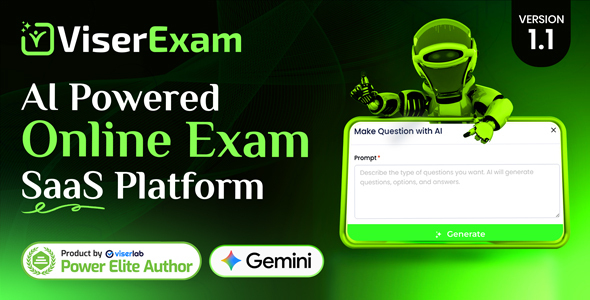
ViserExam – AI Powered Online Exam SaaS Platform operates as an automated online exam platform and standardized ViserExam Platform instance for educational institutions, corporate training divisions, and independent certification providers. The internal schema eliminates operational bottlenecks by utilizing indexed foreign keys across relational database tables and caching frequent question sets within Redis memory stores during concurrent testing sessions. An asynchronous worker queue executes background grading and AI question synthesis via scheduled jobs without blocking HTTP request threads during live examination events.
Controller routing interfaces directly with modular service providers and REST API endpoints to process test-taker telemetry, automated proctoring snapshots, and payment gateway webhooks. The centralized administrative console configures multi-tenant subscription tiers, OpenAI gateway parameters, automated session timeouts, and SMTP notification dispatchers directly from the database layer without manual code modification.
Key Functional Features of the ViserExam Platform for Modern Deployments
- Automated Question Generation Pipeline: Administrators trigger prompt templates connected to external LLM endpoints, compiling multiple-choice, true/false, and subjective prompts directly into structured database tables with assigned scoring rubrics.
- Real-Time Session Monitoring and Proctoring: The client runtime captures WebRTC snapshot feeds, logs window blur events, and transmits periodic heartbeats to verify continuous examinee presence across the online exam platform interface.
- Multi-Tenant Billing and Subscription Matrix: Tenant instances dynamically manage participant limits, storage quotas, and payment gateway recurring subscriptions through verified webhook callbacks.
- Configurable Assessment Timers and Dynamic Shuffling: The testing engine computes randomized question arrays per user session while enforcing server-side timestamp validation to eliminate local client clock tampering.
Real-World Deployment Scenarios
- University Examination Portals: Academic departments deploy the application across dedicated compute clusters to administer concurrent mid-term assessments with automated grade calculation and CSV export capabilities.
- Corporate Employee Compliance Certification: Human resources teams configure recurring annual compliance modules and timed tests, automatically issuing downloadable verification certificates upon candidate score validation.
- Commercial SaaS Testing Services: Independent educators host subscription-based preparation hubs, monetizing practice quizzes through automated payment settlement within the online exam platform ecosystem.
Technical Architecture & Compatibility Standards
The ViserExam Platform codebase requires PHP 8.1 or higher, an active MySQL 8.0 or MariaDB 10.5+ instance, and standard extensions including OpenSSL, PDO, Mbstring, and Tokenizer. It deploys reliably on Nginx or Apache HTTP servers with Composer dependency orchestration and supervisor-managed queue workers for sustained processing loads.
Front-end templates operate on lightweight Bootstrap components and vanilla JavaScript asynchronous fetch requests, maintaining a sub-1.2 second Largest Contentful Paint (LCP) and zero layout shifts. Third-party payment gateways, SMTP mail handlers, and external AI completion endpoints interact through authenticated API protocols.
Frequently Asked Questions About the ViserExam Platform
Q: What infrastructure is required to support concurrent exam sessions?
A: Dedicated cloud compute with at least 4 vCPUs, 8 GB RAM, and a managed Redis cache layer is recommended to sustain over 1,000 simultaneous test submissions efficiently without server latency.
Q: How does the application prevent test-taker cheating during active assessments?
A: Browser focus monitoring flags tab-switching actions, server-side clocks prevent local timer manipulation, and WebRTC integration supports periodic webcam capture during active examination sessions.
Q: Does the system support bulk question import?
A: Administrators can import bulk questions directly via formatted CSV or XLSX spreadsheets alongside the automated AI question generation interface.