Aigocy – AI Agency & Technology HTML Template
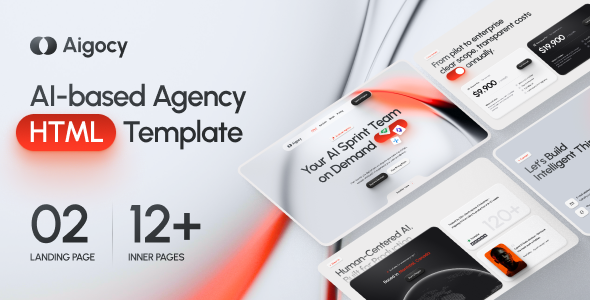
Aigocy Template: Technical Overview & Core Architecture
Aigocy – AI Agency & Technology HTML Template serves as an enterprise AI agency template engineered for machine learning startups, IT consulting firms, and neural network development agencies deploying production-ready Aigocy Template interfaces. The semantic markup architecture eliminates Document Object Model nesting overhead by maintaining a maximum node depth of four levels across primary grid layouts, ensuring rapid parsing across legacy and modern browser rendering engines. Asynchronous script loading pipelines and unbundled modular CSS structures trigger immediate First Contentful Paint events while preventing main-thread blocking during critical client-side layout calculations.
The component system leverages modular HTML5 sections with standardized BEM naming conventions to interface directly with static site generators, headless CMS endpoints, and modern frontend asset pipelines. A centralized SCSS configuration manifest governs design tokens by declaring base typography scalings, dynamic color palette variables, global grid breakpoints, and component spacing matrices without manual revisions across individual stylesheet files.
Key Functional Features of the Aigocy Template for Modern Deployments
- Semantic Component Hierarchy: Custom interface blocks utilize WAI-ARIA landmarks, structured section tags, and schema-compatible structural outlines to ensure strict accessibility compliance and clean AST node generation.
- Hardware-Accelerated Layout Systems: Responsive grids compute dynamic sub-pixel distributions through native CSS Grid and Flexbox primitives, preventing layout thrashing and cumulative layout shifts during dynamic viewport resizing.
- Modular SCSS Tokenization: Preprocessor architecture isolates utility mixins, breakpoints, and interactive state definitions across discrete partials for targeted compilation and reduced asset payloads.
- Optimized Asset Loading Protocols: Asset link tags implement explicit media queries alongside native image decoding attributes, isolating critical path styles to defer non-essential typography and vector icons.
Real-World Deployment Scenarios
- Artificial Intelligence Product Launch Platform: Engineering teams integrate the prebuilt interface modules into static site generators like Astro or Hugo, achieving under-second initial page loads and zero cumulative layout shift for high-volume technical documentation and product waitlists.
- Enterprise Robotics Consultancy Portal: Systems integrators adapt the modular UI blocks within an AI agency template architecture to showcase complex computer vision pipelines, linking multi-tier service tables and client case studies without incurring runtime JavaScript framework bloat.
- Machine Learning SaaS Landing Funnel: Development teams embed the structured form inputs and pricing tiers into headless backend architectures, handling multi-step enterprise subscription inquiries through lightweight asynchronous fetch requests.
Technical Architecture & Compatibility Standards
The template adheres to strict W3C validation standards, delivering valid HTML5 markup coupled with modern ECMAScript specifications. Layout engines render uniformly across evergreen desktop and mobile browsers, including Chromium-based engines, Gecko, and WebKit, with full compatibility sustained down to mobile viewport widths of 320 pixels.
In standardized Lighthouse audits, the Aigocy Template maintains a sub-50ms execution profile and scores in the 95+ percentile for performance, accessibility, and best practices. Code structures export cleanly to modern build systems such as Vite, Webpack, and Parcel, providing an established technical standard for modern AI agency template architecture.
Frequently Asked Questions
Does the template depend on external JavaScript runtime frameworks?
The codebase functions independently of heavy runtime frameworks like React or Vue, relying entirely on vanilla JavaScript and native browser APIs. This design ensures minimal bundle size, instant DOM rendering, and straightforward integration into any existing web stack.
How are responsive grid breakpoints structured within the stylesheet files?
Breakpoints follow mobile-first CSS media queries defined systematically across standard viewport widths from 576 pixels to 1400 pixels. SCSS mixins control these ranges centrally, allowing rapid modifications to column layouts across multi-device viewports.
Can the markup components be adapted for headless content management systems?
The component markup exports directly into templating engines such as Blade, Twig, or JSX without structural refactoring. Developers map dynamic content fields straight into semantic HTML tags to populate dynamic data structures reliably.