 My Account
 Zenis: Technical Overview & Core Architecture
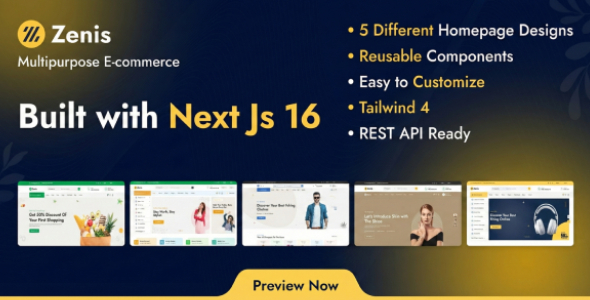
Zenis – Multipurpose Next.js e-Commerce Template provides a high-performance foundation for online stores, leveraging a modern frontend stack to deliver fast user experiences. This template is designed as a complete storefront solution, emphasizing modularity and developer-friendly code for extensive customization.
The frontend UI of Zenis is built with React and Next.js, offering server-side rendering (SSR) and static site generation (SSG) capabilities that significantly reduce initial load times. Interaction with the template involves standard React component development, allowing developers to extend functionalities without deeply modifying core files, ensuring maintainability and straightforward updates. Backend integration typically uses GraphQL or REST APIs for data fetching, connecting seamlessly with various e-commerce platforms or custom backend services.
Key Functional Features of Zenis for Modern Deployments
- Headless E-commerce Architecture: Zenis operates on a headless e-commerce model, decoupling the frontend presentation layer from the backend commerce logic, allowing for greater flexibility in choosing backend providers like Shopify, Saleor, or custom API solutions. This separation ensures that storefront updates can be deployed independently of backend changes, streamlining development cycles and improving overall system resilience.
- Dynamic Routing and SEO Optimization: The template utilizes Next.js’s file-system based routing and built-in SEO features, enabling automatic sitemap generation and efficient meta tag management for product pages and categories. This setup ensures that search engines can effectively crawl and index the store’s content, contributing to higher organic visibility and better search rankings directly out-of-the-box.
- Component-Based UI Development: Zenis is constructed using a modular, component-based approach, where UI elements like product cards, navigation menus, and cart functionalities are independent and reusable React components. This architecture simplifies development, promotes consistency across the application, and allows for rapid iteration and customization without affecting other parts of the user interface.
- Advanced Image Optimization: Next.js’s built-in
Imagecomponent handles responsive image loading, lazy loading, and optimization, automatically serving appropriately sized images in modern formats like WebP based on the user’s device and browser capabilities. This feature drastically reduces page weight and improves Core Web Vitals, leading to a smoother browsing experience and better SEO scores.
Real-World Deployment Scenarios
- High-Traffic Fashion Retailer: A large fashion retailer needing lightning-fast page loads and dynamic content updates for new collections can deploy Zenis to achieve sub-second FCP (First Contentful Paint) across product listings and detail pages. The template’s SSR capabilities are crucial here for immediate content delivery to users and search engine bots.
- Niche Digital Product Marketplace: A specialized marketplace selling digital assets like fonts or templates benefits from Zenis’s flexible API integration to connect with various payment gateways and delivery systems. The modular design allows for custom user dashboards and intricate product filtering without performance degradation.
- Subscription Box Service: A subscription box service leverages the template’s robust component structure to build custom checkout flows and personalized subscriber portals efficiently. The Next.js framework provides the necessary performance overhead to handle recurrent billing cycles and customer account management without perceived latency.
Technical Architecture & Compatibility Standards
This multipurpose Next.js e-Commerce template operates independently of traditional WordPress PHP backends, focusing on JavaScript for its core functionality and frontend rendering. While it integrates with various content management systems (CMS) and e-commerce platforms via APIs, its direct runtime environment is Node.js, not PHP; however, compatibility with headless WordPress instances serving data via GraphQL or REST is fully supported for content management.
The template’s CSS is designed with modern breakpoints, ensuring responsive layouts across all devices from mobile to large desktops, and FCP performance is a primary optimization target, typically achieving scores well within Google’s “Good” threshold through effective code splitting, image optimization, and server-side rendering. Compatibility with third-party JavaScript libraries and UI frameworks is high due to its component-based nature, allowing developers to easily integrate external tools for analytics, chat, or advanced filtering without core conflicts.
Frequently Asked Questions About Zenis
Q: How does Zenis enhance storefront performance?
A: Zenis leverages Next.js’s server-side rendering and static site generation capabilities to pre-render pages, significantly reducing initial load times. This architectural choice results in faster First Contentful Paint and improved user experience compared to client-side rendered applications.
Q: Can Zenis be integrated with existing e-commerce backends?
A: Yes, Zenis, as a multipurpose Next.js e-Commerce template, is designed with a headless architecture, meaning it can connect to virtually any e-commerce backend or CMS that exposes a GraphQL or REST API. This flexibility allows integration with platforms like Shopify, Saleor, WooCommerce (headless setup), or custom backend solutions.
Q: What are the primary technical dependencies for running Zenis?
A: The core technical dependencies for Zenis include Node.js (typically version 16 or newer), npm or Yarn for package management, and a modern web browser for development and testing. Deployment usually involves a platform like Vercel, Netlify, or a custom Node.js server environment.