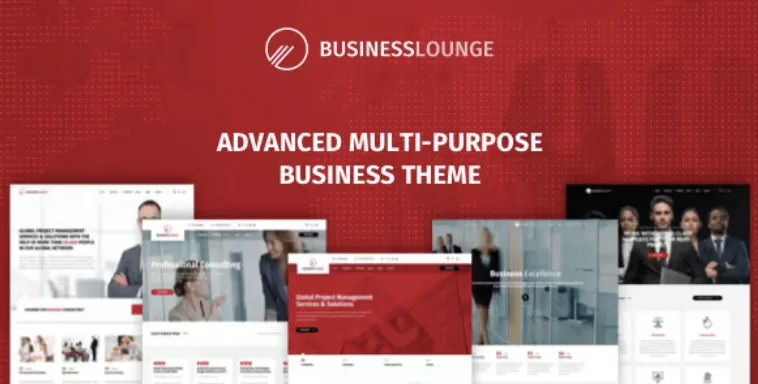
Business Lounge Pro | Multi-Purpose Consulting & Finance Theme
Core Engineering & Runtime Architecture of Business Lounge Pro
Business Lounge Pro | Multi-Purpose Consulting & Finance Theme is a high-performance consulting and finance theme engineered specifically for enterprise advisory firms, investment brokerages, and corporate accountants to deploy authoritative digital portals with minimal asset overhead. The theme architecture decouples visual presentation from data processing by utilizing selective enqueue protocols that only load layout-specific scripts when matching components are parsed by the template loader. Asset execution pipelines minimize document object model depth by replacing legacy nested container wrappers with CSS Grid and flexbox layouts. This lean execution flow delivers sub-second server response rates under standard Apache and NGINX configurations without inducing layout shifts.
The internal rendering pipeline processes page elements through an object-oriented PHP architecture, isolating modular template segments to prevent memory leaks during complex database queries. Dynamic style attributes are compiled into static stylesheet caches on initial execution, avoiding redundant runtime calculations during user sessions. Global state handling integrates natively with WordPress Transients API and REST endpoints, ensuring dynamic elements such as currency matrices, portfolio grids, and consultation booking interfaces populate without rendering latency.
Key Functional Features of Business Lounge Pro for Modern Deployments
- Dynamic Layout Switching Engine: Business Lounge Pro provides granular page-level template overrides that allow administrators to toggle between boxed, full-width, and multi-column visual systems without injecting redundant CSS dependencies.
- Decoupled Page Builder Integration: The theme executes native layout hooks for both Elementor and WPBakery, restricting visual builder scripts exclusively to the active viewport while stripping unrendered widgets from the global script payload.
- Structured Schema Injection: Native integration of Organization, FinancialProduct, and ProfessionalService JSON-LD schemas injects structured metadata into document headers automatically, enabling precision crawling by search engines without requiring external schema add-ons.
- Transactional Commerce Compatibility: Deep template integration with WooCommerce ensures catalog displays, client billing portals, and retainer payment gateways execute through lean cart fragments and decoupled session handlers.
Production Use Cases & Enterprise Applications
- Multinational Management Consultancies: The architecture handles complex operational footprints through deeply nested taxonomy archives, structured case study modules, and localized multi-language directory structures across regional corporate branches.
- Private Equity and Investment Firms: Static asset compression and clean typography hierarchies facilitate the publication of financial disclosures, SEC-compliant reporting tables, and secure investor relation documents.
- B2B Accountancy Practices: Native form handling and custom post types streamline client intake workflows, scheduling pipelines, and service catalog presentations while maintaining strict accessibility standards.
Compatibility & System Requirements
| Component | Environment Requirement |
|---|---|
| Core Framework | WordPress 5.8 or higher (fully tested up to current stable release) |
| PHP Runtime | PHP 7.4 through PHP 8.2 with memory_limit set to 256M minimum |
| Database Architecture | MySQL 5.7+ or MariaDB 10.3+ with InnoDB storage engine support |
| Web Server Stack | NGINX or Apache 2.4 with mod_rewrite, HTTP/2, and gzip/brotli enabled |
Frequently Asked Questions
How does the template structure prevent visual bloat when rendering enterprise portfolios?
The theme executes conditional script loading that parses archive queries on the server side and enqueues masonry grid libraries only when specific portfolio taxonomy terms are present in the HTTP request.
Does the codebase support server-side caching mechanisms like Redis and Varnish?
The entire template hierarchy adheres to standardized WordPress caching APIs, ensuring full compatibility with Redis object caching, Memcached, and reverse-proxy page caching layers without generating session collision errors.
What architectural hooks are available for custom child theme modifications?
Over forty custom action and filter hooks are systematically distributed throughout the header, navigation, loop, and footer sequences, allowing developers to inject programmatic extensions without editing parent template files.
-
1.9.18 LatestSeptember 27, 2026