Speaker Pro – One-Page Music WordPress Theme
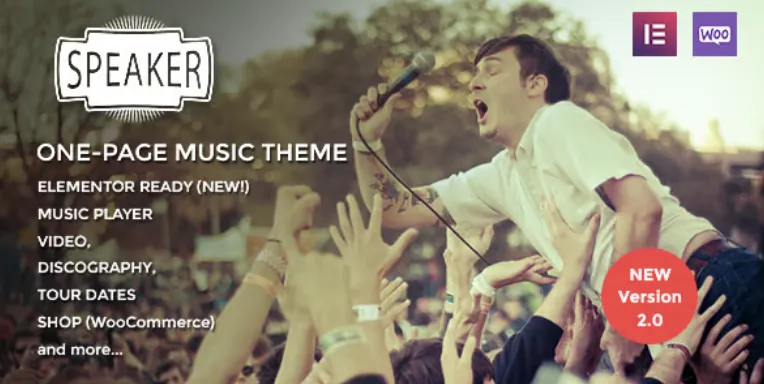
Audio Engine and Event Runtime Architecture of Speaker Pro
Speaker Pro – One-Page Music WordPress Theme is a specialized one-page music WordPress theme engineered specifically for touring musical acts, independent record labels, and festival promoters to consolidate live tour schedules, streaming discography, and electronic press materials into a unified single-page layout. The codebase operates on an asynchronous content-rendering pipeline that eliminates redundant page reloads between media sections while keeping baseline DOM nodes low for rapid mobile parsing. Internal audio players rely on native HTML5 Web Audio API bindings rather than bloated third-party wrapper libraries, mitigating main-thread blocking and securing low First Input Delay metrics across high-traffic mobile scenarios.
Architectural Capabilities & Implementation of Speaker Pro
- Persistent Continuous Playback: The media player architecture operates independently of document scroll events, maintaining non-blocking playback streams across complex single-page user interactions.
- Asynchronous Tour and Event Scheduling: Event rows query sanitized custom post types via asynchronous REST requests, updating venue listings, geolocations, and ticket links without triggering document reflows.
- Modular Section Architecture: The Speaker Pro options framework provides granular layout controls over individual row containers, giving administrators direct control over CSS Grid divisions and column wrapping behaviors.
- Decoupled Media Embed Handling: Video backgrounds and external streaming embeds execute deferred loading logic to prioritize critical path rendering and prevent degradation of Largest Contentful Paint.
Production Use Cases & Operational Scenarios
- Single-Artist Release Campaigns: Independent producers deploy the one-page music WordPress theme to aggregate track previews, platform redirect links, and press imagery on a single lightweight landing page that loads instantly under peak promotional traffic.
- Tour and Festival Stage Schedules: Live event coordinators configure time-indexed schedule grids to direct festival attendees to current stage lineups, vendor locations, and gate advisories on mobile networks.
- Agency Artist Rosters: Talent management teams implement modular sections to showcase multiple signed acts, embedding customized audio playlists and direct booking inquiry forms without bloating database requests.
Technical Specifications & Ecosystem Support
| Core Framework | Semantic HTML5, CSS Grid/Flexbox primitives, native Web Audio API |
|---|---|
| Performance Profile | Core Web Vitals optimized, zero external jQuery media dependencies, decoupled asset queues |
| Infrastructure Compatibility | PHP 8.1, 8.2, and 8.3 compliant; validated under Redis, Memcached, and Varnish caching layers |
| Platform Standards | WordPress 6.0+ core hooks, standard custom post type architectures, Multisite network compliant |
Frequently Asked Questions
How does the media playback engine handle audio caching?
The player leverages standard browser cache storage alongside client-side buffer allocation to ensure continuous audio streaming during intense DOM manipulation.
Does the layout architecture interfere with server-side caching engines like Varnish or Nginx FastCGI?
The theme supports aggressive static page caching because dynamic interactions and schedule lookups rely on client-side fetch calls that execute independently of server-cached HTML documents.
Can individual section anchors be targeted directly by external marketing campaigns?
Deep linking works natively via URL fragment identifiers that match predefined container IDs, allowing external campaigns to scroll the user viewport directly to target sections without executing extra JavaScript redirect steps.