Zeen Pro | Newspaper Magazine News Blog WordPress Theme + WooCommerce
Core Engineering & Runtime Architecture of Zeen Pro
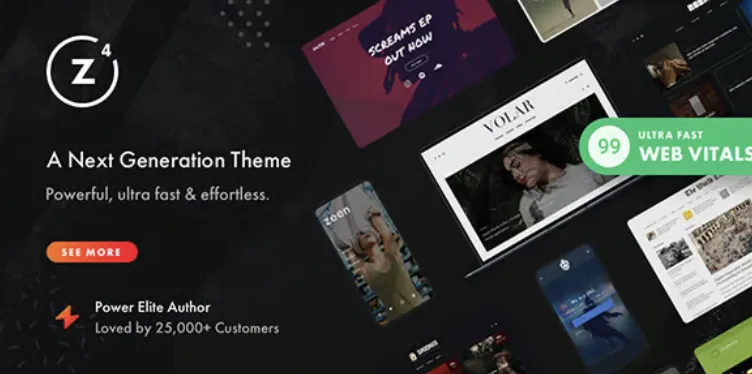
Zeen Pro | Newspaper Magazine News Blog WordPress Theme + WooCommerce is a high-performance news blog theme engineered specifically for digital publishers, media enterprises, and editorial teams to deploy content-dense magazine layouts with optimal page-speed metrics. The codebase minimizes Document Object Model (DOM) depth by refactoring traditional layout wrappers into CSS Grid and Flexbox primitives, preventing reflow penalties during high-volume traffic events. Asset orchestration relies on selective script loading; JavaScript bundles for features like sticky sidebars, mega menus, and slide-in drawers load conditionally only when their respective layout hooks execute in the runtime pipeline. For server-side rendering, this news blog theme implements native transient caching for complex category queries, directly reducing MySQL execution overhead across archive and taxonomy views.
Architectural Capabilities & Implementation of Zeen Pro
- Adaptive Typography and Reading Mode System: Implements a client-side layout engine that toggles dark and light palettes via CSS custom properties without requiring page reloads or triggering external stylesheet fetches.
- Modular Header and Mega Menu Engine: Operates using CSS Grid structures that evaluate navigation trees via a custom walker class, preventing recursive database lookups while maintaining responsive off-canvas transitions.
- Editorial Review and Scoring Schema: Generates structured JSON-LD payloads natively within single-post templates, injecting Google-compliant schema metadata directly into the document head for organic search parsing.
- WooCommerce Single-Query Integration: Overrides default template loops with lightweight catalog components, ensuring e-commerce monetization blocks render without adding redundant script payloads to standard editorial articles.
Production Use Cases & Enterprise Applications
- High-Frequency Digital Newsrooms: Editorial teams running breaking news desks utilize the automated layout builders to deploy live-blog feeds, dynamic trending-topic tickers, and AJAX-driven infinite pagination without manual server-side caching invalidation.
- Affiliate and Product Review Platforms: Niche publishers leverage the built-in grading modules, comparison tables, and dynamic visual rating bars to display aggregate ratings alongside automated structured schema for product evaluation directories.
- Hybrid Media Stores: Content creators manage synchronized digital publication archives and branded merchandise storefronts, balancing media-heavy long-form articles with performant shopping cart interfaces on a unified domain structure.
Compatibility & System Requirements
Production environments running Zeen Pro require PHP 7.4 or higher, with PHP 8.1+ recommended to maximize JIT compilation performance during editorial page generation. The template architecture fully respects standard WordPress theme standards, relying on native `wp_enqueue_scripts` dependency arrays to eliminate duplicate library initialization. MySQL 5.7+ or MariaDB 10.3+ is mandatory to handle concurrent taxonomy updates, full-text post indexing, and real-time database transactions under continuous reading loads.
On the web server tier, Nginx or Apache HTTP Server with HTTP/2 and Brotli compression enabled yields baseline Largest Contentful Paint (LCP) scores below 1.2 seconds on standard server configurations. The template interfaces cleanly with Object Cache engines such as Redis or Memcached, as well as edge-caching proxies like Cloudflare and Varnish, because dynamic elements like reading progress indicators and theme modes execute strictly on the client side via decoupled vanilla JavaScript APIs.
Frequently Asked Questions
How does the theme handle asset delivery to prevent render-blocking resources?
The theme decouples core structural CSS from decorative components, inlining critical path styling directly into the HTML head while deferring secondary CSS files and non-essential JavaScript via native script loading attributes.
Can third-party caching plugins conflict with the dynamic reading mode switch?
No conflicts occur because theme switching is handled purely within the browser using client-side localStorage and CSS variables, allowing server-side pages to remain fully static within Varnish or Redis page caches.
Does the editorial review schema require third-party structured data plugins?
No external plugins are required because the theme architecture injects valid JSON-LD metadata directly into the document markup based on the values stored in native post meta fields.