
GymBase Pro – Gym Fitness WordPress Theme
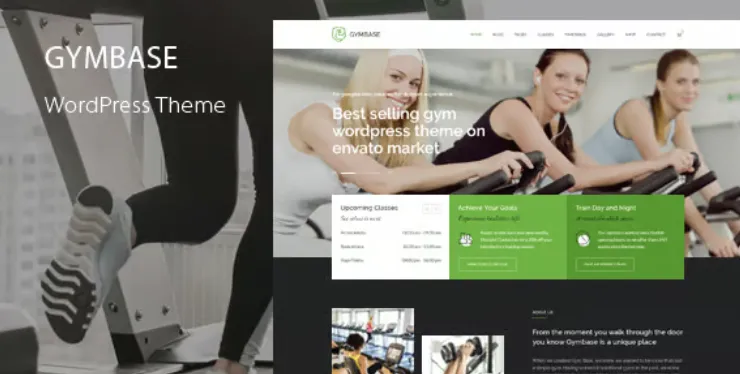
GymBase Pro: Timetable Architecture & Rendering Pipeline
GymBase Pro – Gym Fitness WordPress Theme is a specialized gym fitness theme engineered specifically for athletic club managers, private studio operators, and personal fitness trainers to manage class schedules and automate member session registrations. The template executes a structured weekly timetable system built on custom post types, decoupling event taxonomies from static page builders to maintain clean database queries. Client-side rendering leverages vanilla JavaScript event delegation to toggle daily schedules dynamically, preventing page reloads and keeping First Input Delay (FID) and Interaction to Next Paint (INP) within optimal thresholds across viewports.
The layout engine prioritizes a lean DOM hierarchy, avoiding nested container wrappers that typically degrade Core Web Vitals scores. Asset loading is modularized so that schedule logic, trainer profile templates, and media carousels only register their corresponding CSS and script bundles on relevant page endpoints. Integrated e-commerce modules interface cleanly with WooCommerce hooks, allowing facilities to sell subscription passes and physical merchandise without template conflicts.
Architectural Capabilities & Implementation of GymBase Pro
- Schedule and Class Matrix Processing: The theme registers dedicated schema-ready custom fields for trainers, workout categories, and time intervals, assembling a weekly schedule grid via an asynchronous REST API endpoint rather than bloating static HTML payloads.
- Modular Stylesheet Pipeline: CSS definitions are split into micro-stylesheets, ensuring non-critical visual assets defer until after the First Contentful Paint (FCP) resolves under 1.2 seconds on standard mobile network configurations.
- Custom Action Hooks and Filter Hierarchy: GymBase Pro exposes discrete PHP action hooks before and after schedule renders, enabling custom membership authorization callbacks to restrict specific class reservations to authenticated users.
- E-Commerce Endpoint Alignment: Built-in product archives and single-item templates adhere to native WooCommerce templating standards, preserving standard checkout filter chains and cart fragment handlers.
Production Use Cases & Enterprise Applications
- Multi-Location Fitness Centers: Multi-tier workout facilities deploy the codebase to run segmented class matrices across distinct operational zones, routing schedule queries through category-based URL parameters without layout reflows.
- Independent Personal Training Hubs: Boutique functional training studios configure this gym fitness theme to pair individual instructor portfolios with linked timetable blocks, converting visitor interactions directly into checkout transactions for private sessions.
Compatibility & System Requirements
| Component | Requirement Specification |
|---|---|
| Runtime Environment | PHP 8.1 / 8.2 with memory_limit set to at least 256MB |
| Database Management | MySQL 8.0+ or MariaDB 10.5+ with InnoDB storage engine |
| Content Management Core | WordPress 6.2+ (fully compatible with standard block and classic workflows) |
| Browser Support Matrix | Chromium-based engines, Mozilla Firefox, Apple Safari (ES6 modules required) |
Frequently Asked Questions
How does the timetable module handle server-side cache layers like Varnish or Redis?
The class timetable fetches data through standard nonced REST endpoints or localized JSON objects, which means cached static HTML pages bypass dynamic database queries while still reflecting schedule updates via client-side revalidation.
Can custom fields be mapped to the trainer archive templates?
Developers can attach native WordPress post meta or external custom field arrays to the trainer post type directly, rendering additional credentials through standard theme action hooks without modifying core files.
Does the layout enforce a specific page builder dependency?
The structural layout remains builder-agnostic by compiling standard semantic markup and container queries, allowing content developers to use native block components or compatible visual builders without style overriding issues.
-
v16.4 LatestSep 10, 2026