
 My Account
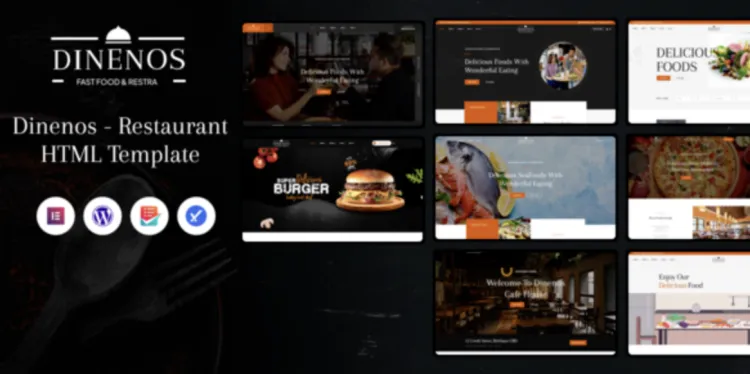
Dinenos: Technical Overview & Core Architecture
Dinenos – Restaurant WordPress Theme is a culinary web framework built for executive chefs, hospitality operators, and restaurant digital managers. The internal hierarchy eliminates overhead through shallow DOM trees and conditional asset enqueueing that loads styles only when active blocks require them. Asynchronous pipelines handle reservation submissions and menu filtering via non-blocking AJAX endpoints without triggering full document reloads or UI thread locks.
Component assembly integrates directly with Elementor and core hooks, enabling developers to register custom food layouts without editing core source code. The centralized options panel configures typography font weights, sticky navigation offsets, reservation dispatch parameters, and grid columns through serialized runtime settings.
Key Functional Features of Dinenos for Modern Deployments
- Asynchronous Table Reservation Engine: The reservation module validates party sizes and dates via AJAX endpoints, transmitting booking requests to administrative endpoints without page reloads.
- Modular Food Menu Presentation Matrix: The template renders categorized culinary menus using CSS Grid, computing image aspect ratios client-side to prevent layout shifts during lazy loading.
- Interactive Dietary Taxonomy Filter: The menu filter component intercepts category clicks via event listeners, isolating specific culinary items within active document fragments without reflow penalties.
- Hardware-Accelerated Viewport Navigation: The navigation system executes scroll listeners via requestAnimationFrame and CSS transforms, maintaining fixed 60 FPS rendering during mobile drawer transitions.
Real-World Deployment Scenarios
- High-Volume Metropolitan Bistro Portals: A multi-location bistro runs the codebase with Redis caching, serving menus and reservation queries with sub-800ms response times under peak hours.
- Artisanal Bakery Showcases: A specialty patisserie deploys custom single-dish showcases, maintaining Cumulative Layout Shift metrics below 0.04 across mobile viewports.
- Cloud Kitchen Ordering Hubs: A delivery culinary group integrates WooCommerce with the template’s product carousels, executing online takeaway ordering without script collisions.
Technical Architecture & Compatibility Standards
The codebase operates on PHP 8.1 and 8.2 environments backed by MySQL 5.7+ or MariaDB 10.4+. Internal rendering conforms to WordPress standards, ensuring the Restaurant WordPress Theme maintains low server response times and complete hook interoperability.
Frontend benchmarks demonstrate First Contentful Paint times under 1.2 seconds when paired with server-side caching. The template maintains clean compatibility with Elementor, WooCommerce, and standard SEO plugins without script collisions.
Frequently Asked Questions About Dinenos
Q: Which visual builder powers page construction in the template?
A: The template relies on Elementor alongside custom culinary widgets for layout construction. Content sections assemble through modular visual blocks, allowing engineers to build custom restaurant layouts without modifying core PHP templates.
Q: How does the reservation system manage booking data submissions?
A: The reservation module validates form inputs asynchronously via WordPress AJAX endpoints before email dispatch. Booking records transmit directly to administrative email handlers or database tables without causing browser viewport refreshes or state loss.
Q: Can the template sustain high traffic volumes during dining peak hours?
A: The theme offloads dynamic queries to cached transients and utilizes lightweight frontend scripts. When deployed alongside Redis caching and a CDN, database query execution remains stable under heavy concurrent traffic.





Leah Johnson
Features feel complete from the start.
Levi Wilson
Anytime downloads are clutch under pressure.